Why is Kaddu-Bhat prepared on the day of Nahay-Khay during Chhath Puja? Mythological and Scientific Reasons
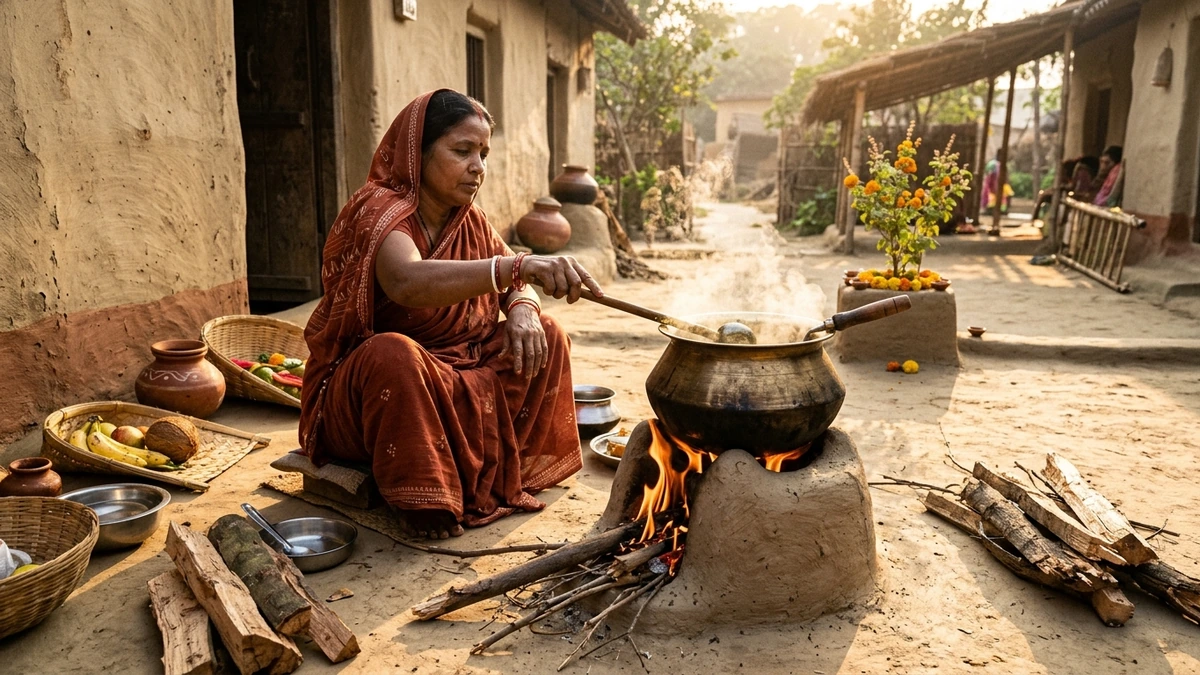
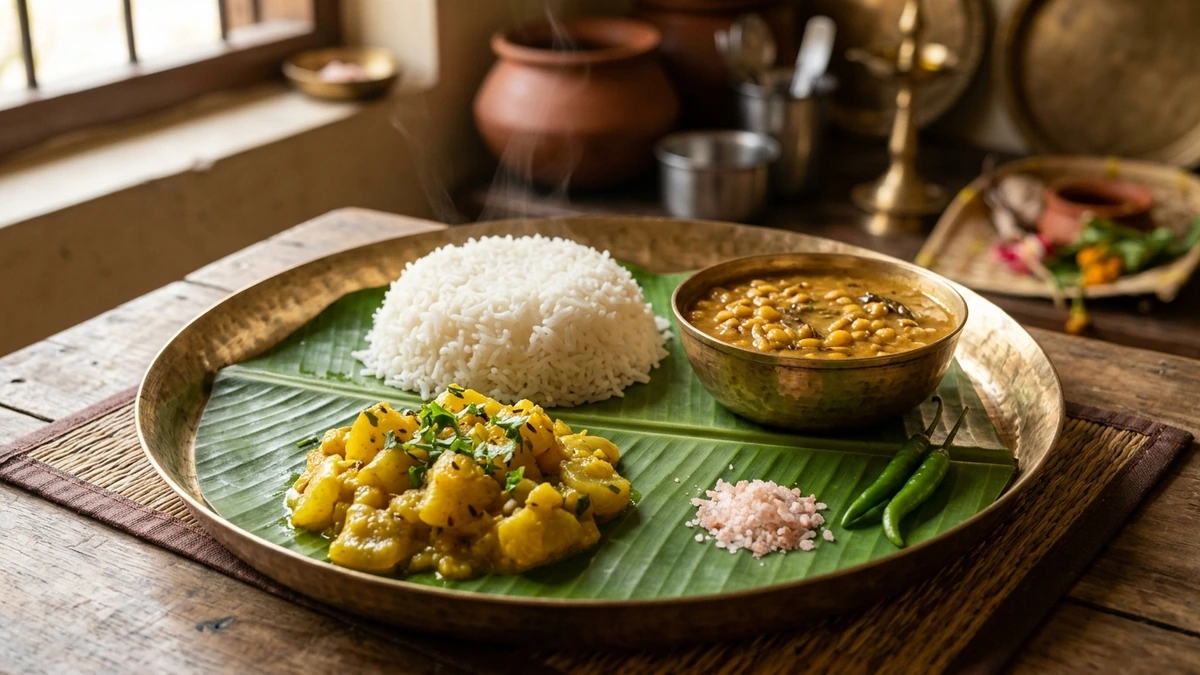 AI-generated illustration
Chhath Puja 2026 (Nahay-Khay to Paran) has concluded. This article is preserved for ritual, cultural, and spiritual reference. To explore upcoming festivals and auspicious muhurats, check the links below:
KEY HIGHLIGHTS
On the first day of Chhath Puja, Nahay-Khay, devotees observe the traditional ritual of consuming Kaddu-Bhat (bottle gourd and rice) with chana dal. Beyond its deep spiritual significance, this practice serves as a vital detoxification process, preparing the body for the rigorous 36-hour nirjala fast while offering profound, time-honored scientific benefits.
On the Chaturthi of Kartik Shukla, the first day of the great festival of folk faith, Chhath Puja, is celebrated as 'Nahay-Khay'. On this day, after a holy dip in the Ganges and a thorough cleaning of the house, there is a centuries-old tradition of preparing and consuming 'Kaddu-Bhat'—a meal consisting of bottle gourd curry, arwa rice (raw rice), and split Bengal gram (chana dal). But have you ever wondered why, at the beginning of such a grand and rigorous festival, a simple meal of Kaddu-Bhat is made mandatory instead of a lavish feast or fried sweets? Behind this lies not only a deep religious and mythological mystery but also miraculous principles of Ayurveda and modern medical science that will surely surprise you.
Table of Contents
A Brief Summary of Kaddu-Bhat on Nahay-Khay
- Mythological Reason: Bottle gourd (kaddu/lauki) is considered the most Sattvic, pure, and free from Tamasic impurities. The use of garlic, onion, or common salt is strictly prohibited.
- Ayurvedic and Scientific Reason: Bottle gourd contains 96% water. It keeps the body hydrated and detoxifies the digestive system before the upcoming 36-hour continuous waterless (Nirjala) fast.
- Chana Dal and Arwa Rice: Chana dal provides essential protein, while arwa rice offers the necessary carbohydrates, providing the body with energy during the fast.
Religious and Mythological Significance of Kaddu-Bhat
In Sanatan tradition, every great vow (Mahavrat) begins with 'Atma-Shuddhi' (purity of mind, speech, and action). According to the Chhath Puja 2026 Calendar, on the day of Nahay-Khay, the devotees take a bath in a river at sunrise and wear clean, new clothes.
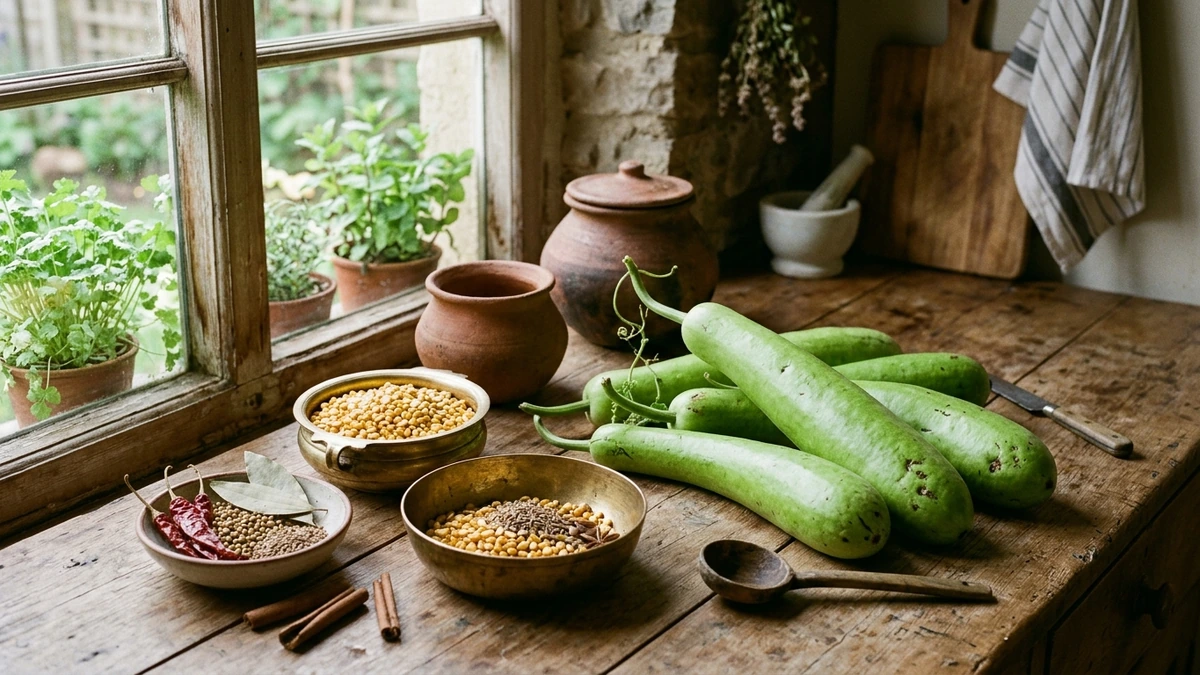
In scriptures, the bottle gourd is considered dear to Lord Shiva and nature. Growing easily on the ground without any chemical fertilizers, the bottle gourd possesses the divine ability to absorb negative energy and radiate positive energy. It is cooked in pure cow ghee and rock salt (sendha namak). Once the meal is prepared, it is first offered to the Sun God and Chhathi Maiya; then, the devotee consumes it, and finally, other family members partake in it as 'Prasad'.
5 Major Scientific and Health Benefits of Kaddu-Bhat
From the perspective of modern nutritional science and Ayurveda, the Nahay-Khay of Chhath Puja is a highly planned 'Pre-Fasting Detox' process:
1. Keeping the body deep-hydrated (96% Water Content)
Bottle gourd consists of approximately 96 percent water. After Kharna, the Chhath devotee must go without even a drop of water for 36 hours. If heavy, fried, or salty food is consumed on the first day, the body will experience rapid dehydration and thirst. Eating Kaddu-Bhat ensures sufficient water storage in the body's cells, preventing dehydration during the waterless fast.
2. Calming stomach acidity
The nature of bottle gourd is highly alkaline. When a person fasts for a long time, gastric acid in the stomach can increase, leading to acidity and heartburn. Kaddu balances the pH level of the stomach, preventing heartburn even during the 36-hour fast.
3. Power backup of protein and complex carbs
The Kaddu-Bhat platter is not just about the gourd; it includes chana dal and arwa rice:
- Chana Dal: A rich source of protein and dietary fiber, which maintains muscle strength.
- Arwa Rice: This is unboiled, non-polished rice that is easily digestible and releases glucose slowly.
- Rock Salt (Sendha Namak): It contains 84 natural minerals that keep the body's electrolytes balanced.
4. Digestibility and complete intestinal cleansing
Bottle gourd is rich in soluble fiber. It increases intestinal motility and flushes toxins out of the digestive system. It is essential for the stomach to be completely clean before the fast begins, so that one does not feel heavy during the fasting period.
5. Cooling effect and mental peace
Bottle gourd contains minerals like magnesium, potassium, and zinc, which calm the nervous system and reduce mental stress. This helps the devotee maintain a calm mind and focus while following the rigorous rules of the puja.
Nutrition Profile of the Kaddu-Bhat Platter
| Food Component | Key Nutrients | Physical Benefit during Fasting |
|---|---|---|
| Bottle Gourd (Kaddu) | Water (96%), Potassium, Vitamin C | Electrolyte balance and prevention of dehydration |
| Chana Dal | Plant Protein, Iron, Folate | Slow release of energy and protection against weakness |
| Arwa Rice | Complex Carbohydrates | Replenishing glycogen stores |
| Pure Cow Ghee | Healthy Fats, Butyric Acid | Intestinal protection and vitamin absorption |
| Rock Salt | Sodium Chloride & 84 Trace Minerals | Maintaining normal blood pressure |

Traditional Rules for Preparing Kaddu-Bhat
Chhath's Kaddu-Bhat is not prepared like a normal meal. Strict rules must be followed:
- Clay Stove or New Gas Stove: Traditionally, it is cooked in the courtyard on a new clay stove using dried mango wood. In modern homes, if cooked on a gas stove, the stove is thoroughly cleaned and sprinkled with Gangajal.
- Brass or Bronze Utensils: The use of aluminum or iron utensils is prohibited. Only brass, bronze, or pure clay pots are used.
- Complete Abstinence from Garlic and Onion: From Nahay-Khay until the Paran (breaking of the fast), the entry of garlic, onion, non-vegetarian food, or alcohol into the house is strictly forbidden.
- Devotee's First Meal: Once the food is prepared, the devotee eats first in silence, meditating on the Sun God. Only after they have eaten can other family members consume it.