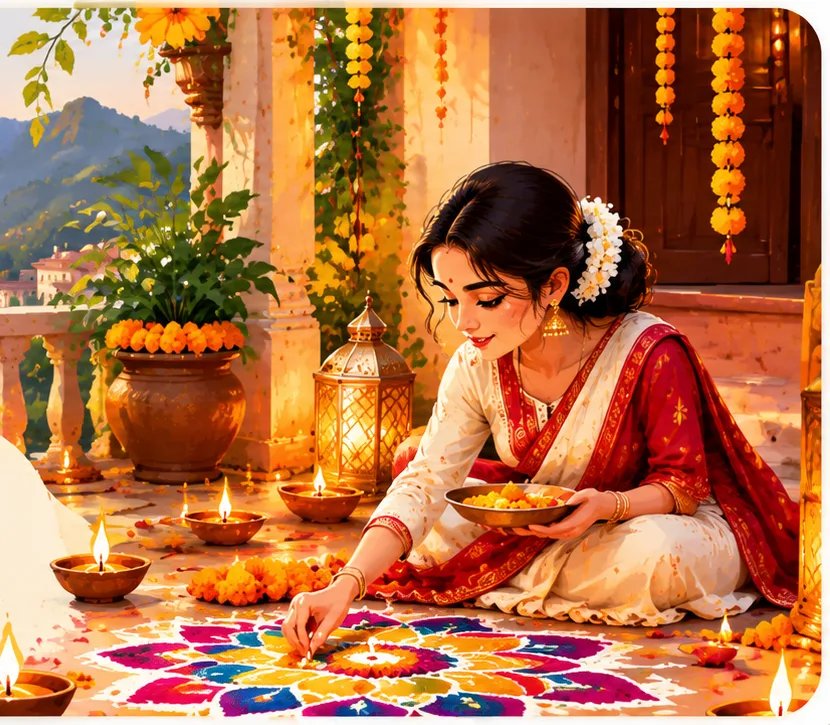
When is Dev Uthani Ekadashi 2026? [Date & Auspicious Timing] November 21 Prabodhini Ekadashi Vrat Katha, Puja Vidhi, Sugarcane Mandap & Rangoli
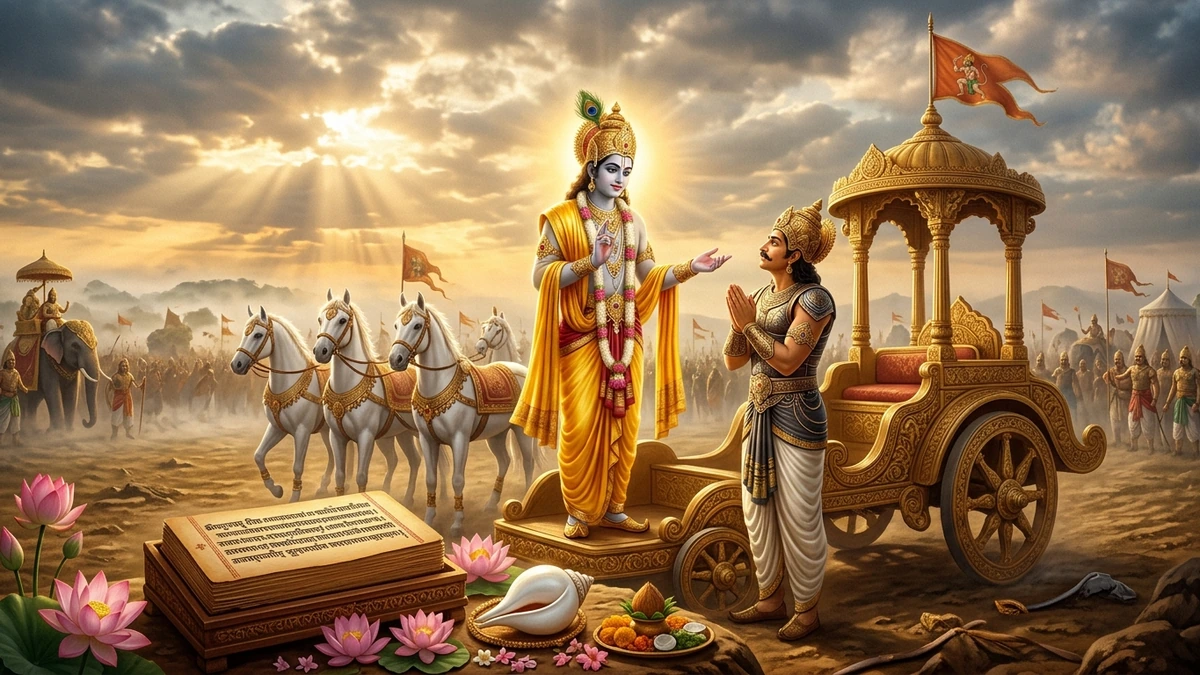
 AI-generated illustration
KEY HIGHLIGHTS
Devauthani Ekadashi 2026, or Prabodhini Ekadashi, falls on November 21st, marking the auspicious day Lord Vishnu awakens from his four-month cosmic slumber. Celebrate this sacred occasion by exploring the ideal puja timings, the traditional sugarcane mandap ritual, the complete Vrat Katha, and the soul-stirring Utho Deva folk songs.
Quick Answer: When is Dev Uthani Ekadashi 2026? (Dev Uthani Ekadashi 2026 Date & Muhurat)
According to the Vedic Panchang, Dev Uthani Ekadashi (Prabodhini Ekadashi) in the year 2026 will be observed with devotion on November 21, 2026 (Saturday). The Ekadashi Tithi of the Shukla Paksha in the month of Kartik will begin on November 20, 2026, at 01:42 PM and will continue until 11:28 AM on November 21, 2026. Following the scriptural rule of Udaya Tithi, the Ekadashi fast will be observed on November 21, 2026. The fast will be broken (Parana) on November 22, 2026 (Sunday), during the auspicious window of 06:49 AM to 09:00 AM, before the Dwadashi Tithi concludes.
Table of Contents
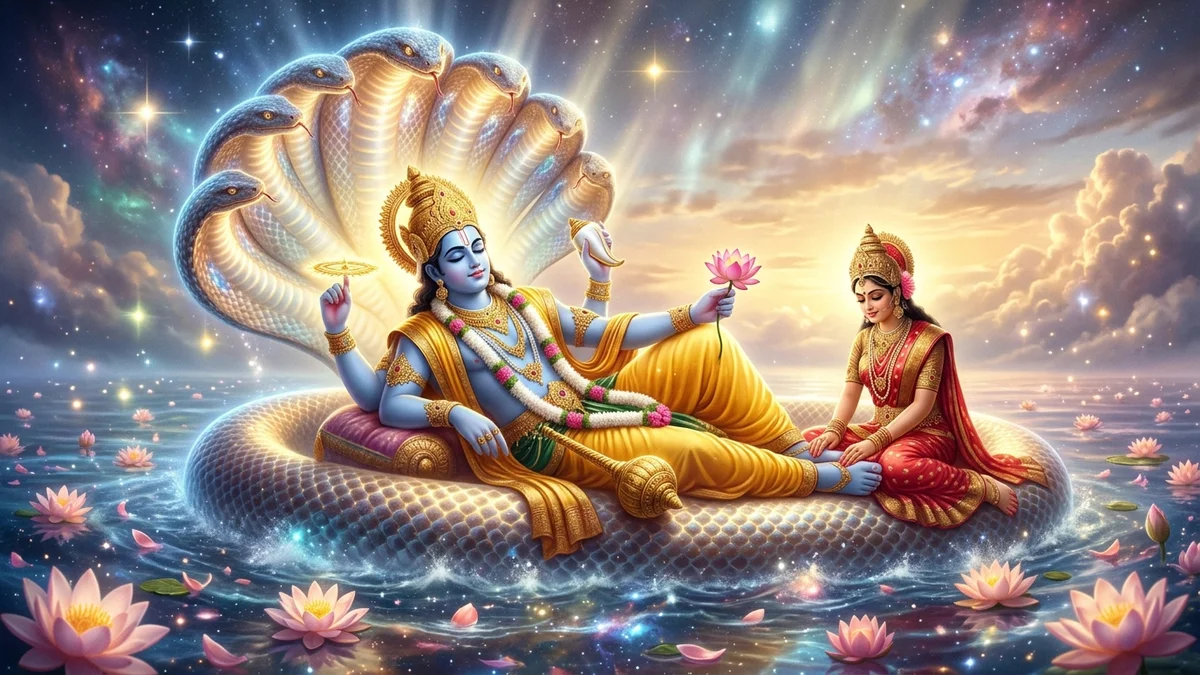
In Sanatan Dharma, the Ekadashi of the Shukla Paksha in the month of Kartik is known as Dev Uthani Ekadashi, Prabodhini Ekadashi, or Devotthan Ekadashi. This sacred date is considered highly miraculous and auspicious from a religious and spiritual perspective. Lord Shri Hari Vishnu, who enters a four-month 'Yog Nidra' (divine slumber) in the Ksheer Sagar starting from Harishayani Ekadashi in the month of Ashadha, awakens on this day. With the awakening of Lord Vishnu, auspicious energies permeate the universe, and all auspicious activities that were paused for the last four months - such as weddings, Mundan ceremonies, Yajnopavita (sacred thread ceremonies), housewarmings, and the launch of new businesses - begin with great joy and enthusiasm.
Dev Uthani Ekadashi 2026: Date, Parana Time, and Detailed Panchang
According to scriptures and the Nirnaya Sindhu, special consideration is given to Udaya Tithi and Hari Vasara during the Ekadashi fast. If you are planning to observe the sacred Dev Uthani Ekadashi fast in 2026, please note the following authentic Panchang schedule:
| Panchang Event | Date | Auspicious Timing |
|---|---|---|
| Kartik Shukla Ekadashi Tithi Begins | November 20, 2026 (Friday) | From 01:42 PM |
| Kartik Shukla Ekadashi Tithi Ends | November 21, 2026 (Saturday) | Until 11:28 AM |
| Main Day of Ekadashi Fast | November 21, 2026 (Saturday) | Fast for the entire day from sunrise |
| Hari Vasara End Time | November 21, 2026 (Saturday) | 05:04 PM |
| Dev Uthani Ekadashi Parana Time | November 22, 2026 (Sunday) | 06:49 AM to 09:00 AM |
| Dwadashi Tithi End Time | November 22, 2026 (Sunday) | Until 09:00 AM |
Important Parana Rule: The Ekadashi fast must always be broken after the Hari Vasara ends and before the Dwadashi Tithi concludes. Since the Dwadashi Tithi ends at 09:00 AM on November 22, ensure you complete the Parana between 06:49 AM and 09:00 AM.
Dev Uthani Ekadashi 2026 Parana Timings in Major Indian Cities
Depending on local sunrise times, there is a slight variation in the Parana timing across major Indian cities on November 22, 2026. Check the schedule for your city below:
| City | State | Auspicious Parana Time (Nov 22, 2026) |
|---|---|---|
| New Delhi | Delhi NCR | 06:50 AM to 09:00 AM |
| Patna | Bihar | 06:17 AM to 08:42 AM |
| Lucknow | Uttar Pradesh | 06:34 AM to 08:55 AM |
| Varanasi | Uttar Pradesh | 06:26 AM to 08:50 AM |
| Jaipur | Rajasthan | 06:54 AM to 09:00 AM |
| Mumbai | Maharashtra | 06:52 AM to 09:00 AM |
| Kolkata | West Bengal | 06:01 AM to 08:29 AM |
| Ranchi | Jharkhand | 06:14 AM to 08:40 AM |
| Bhopal | Madhya Pradesh | 06:42 AM to 09:00 AM |
| Ahmedabad | Gujarat | 07:01 AM to 09:00 AM |
21 Essential Puja Items for Dev Uthani Ekadashi (Complete Puja Samagri List)
The evening puja of Dev Uthani Ekadashi is very special as new harvest, seasonal tubers, and sugarcane are offered to Lord Shri Hari. Before starting the puja, ensure you have the following 21 items:
Natural & Agricultural Offerings
- Sugarcane: 4 or 5 whole sugarcane stalks with leaves (for building the mandap)
- Water Chestnut (Singhara): Fresh green or black water chestnuts
- Sweet Potato: Roasted or raw sweet potatoes
- Radish & Carrots: Fresh radish and carrots with leaves
- Ber & Amla: Fresh ripe wild berries and medicinal Amla
- Seasonal Fruits: Bananas, apples, guavas, custard apples, and pomegranates
- Raw Turmeric & Ginger: Fresh turmeric and ginger roots
Vedic Puja & Ritual Items
- Shaligram or Vishnu Idol: For the center of the puja
- Red Ochre (Geru) & Rice Paste (Aipan): To draw the sacred footprint design in the courtyard
- Yellow Cloth & Kalava: Yellow garment and sacred thread for Lord Vishnu
- Tulsi Leaves & Manjari: For offering (plucked the previous evening)
- 11 or 21 Earthen Lamps: Filled with pure cow ghee or sesame oil
- Sandalwood, Roli, Akshat, & Incense: For tilak and aarti
- Camphor, Betel Leaf, Betel Nut, Cloves, & Cardamom: For offering and mouth freshener
Simple Puja Method for Sugarcane Mandap and Courtyard (Step-by-Step Puja Vidhi)
The puja for Dev Uthani Ekadashi is performed in the evening in the courtyard, on the terrace, or in a clean puja room. This ritual is a beautiful blend of folk culture and Vedic tradition. The step-by-step method is as follows:
Step 1: Drawing the Sacred Design (Chowk) and Footprints
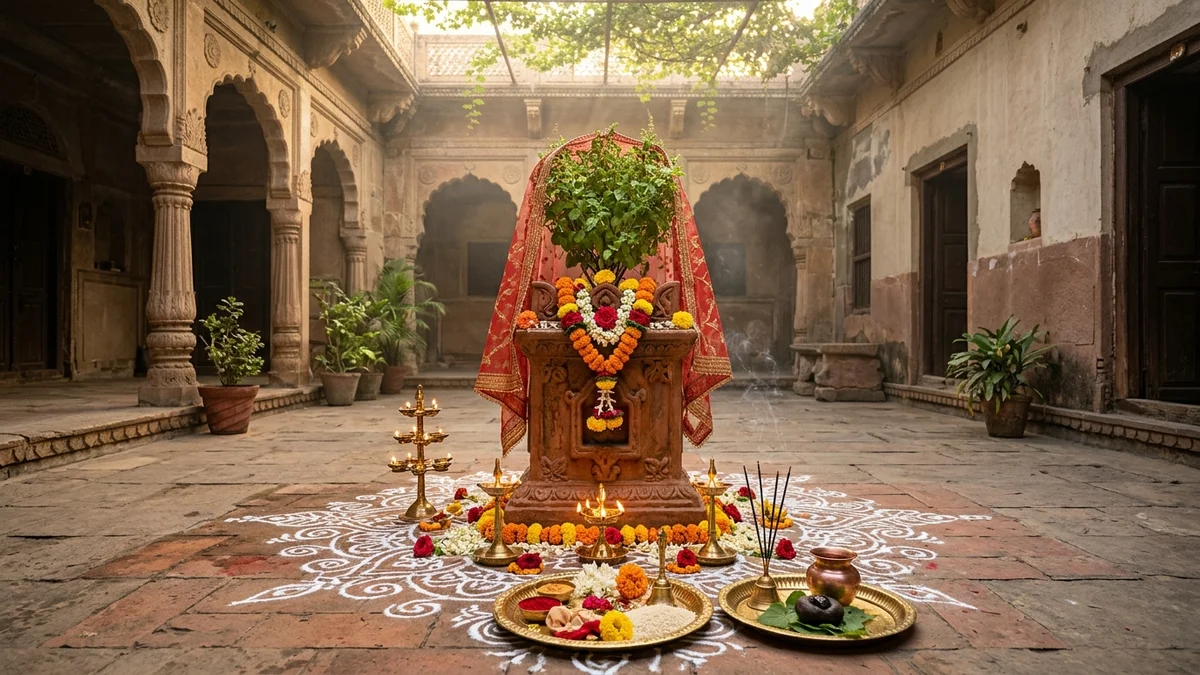
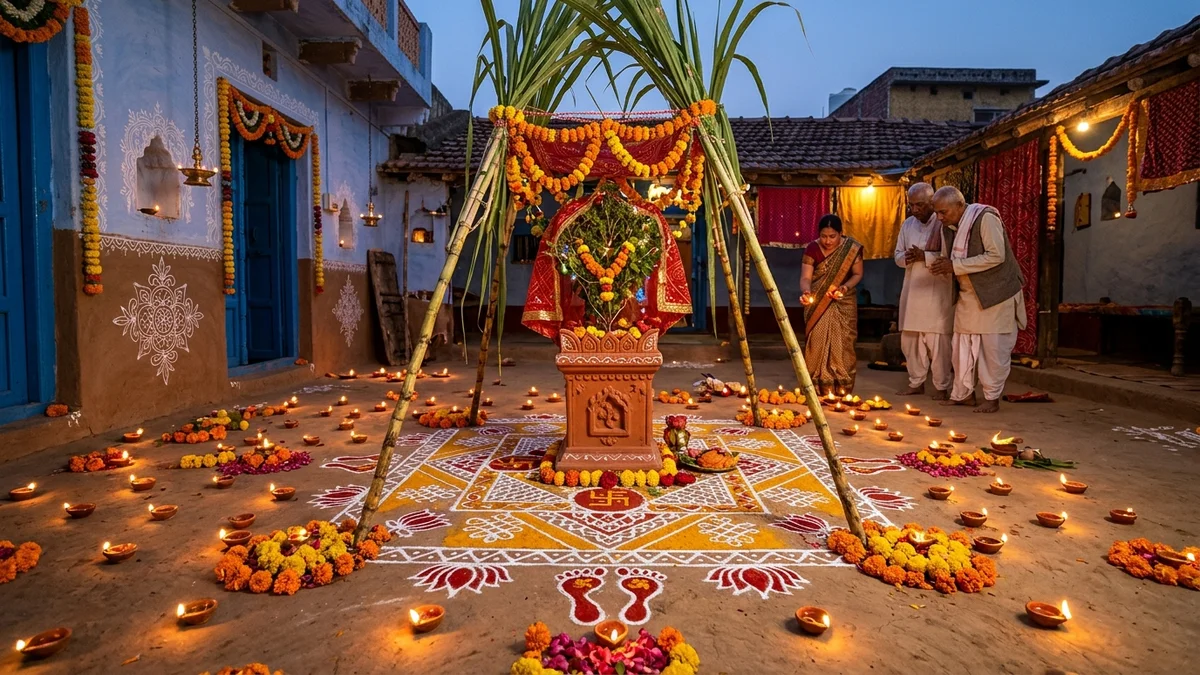
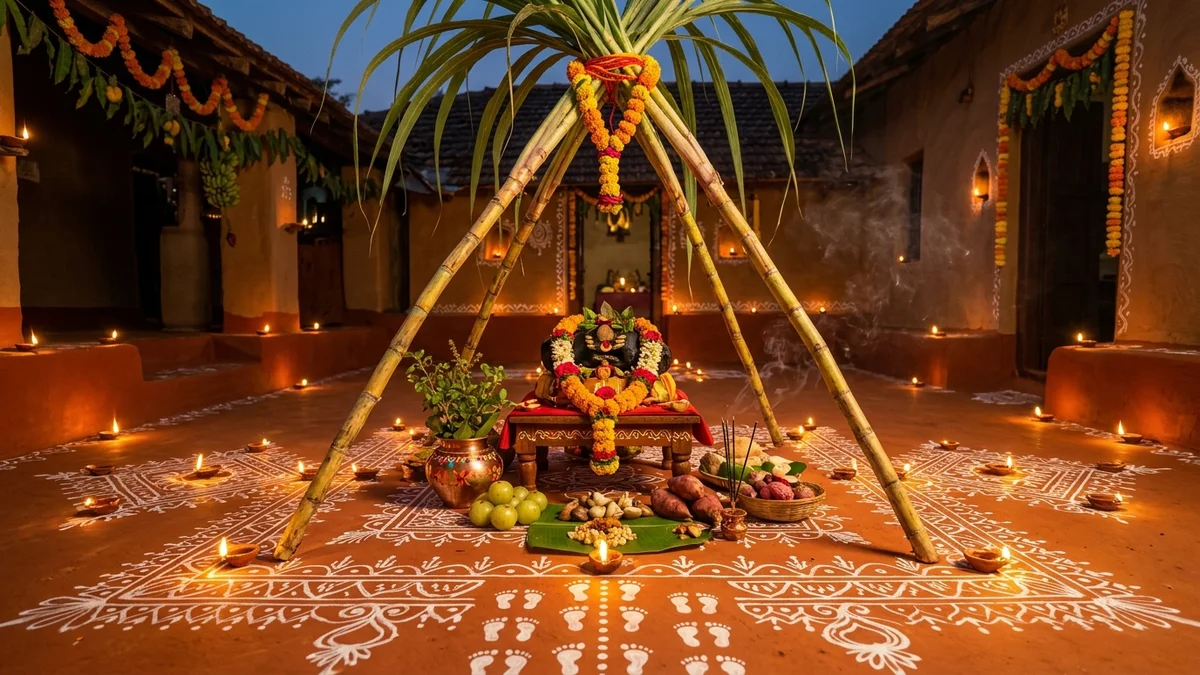
In the courtyard or a clean space, create a beautiful traditional design using red ochre and a rice paste (Aipan). In the center, draw the footprints of Lord Vishnu (Vishnu Pad). Ensure the footprints face inward toward the house, symbolizing that Lord Narayana is entering your home. To decorate the corners, you can use our easy dot rangoli designs and fresh flower rangoli.
Step 2: Setting up the Sugarcane Mandap
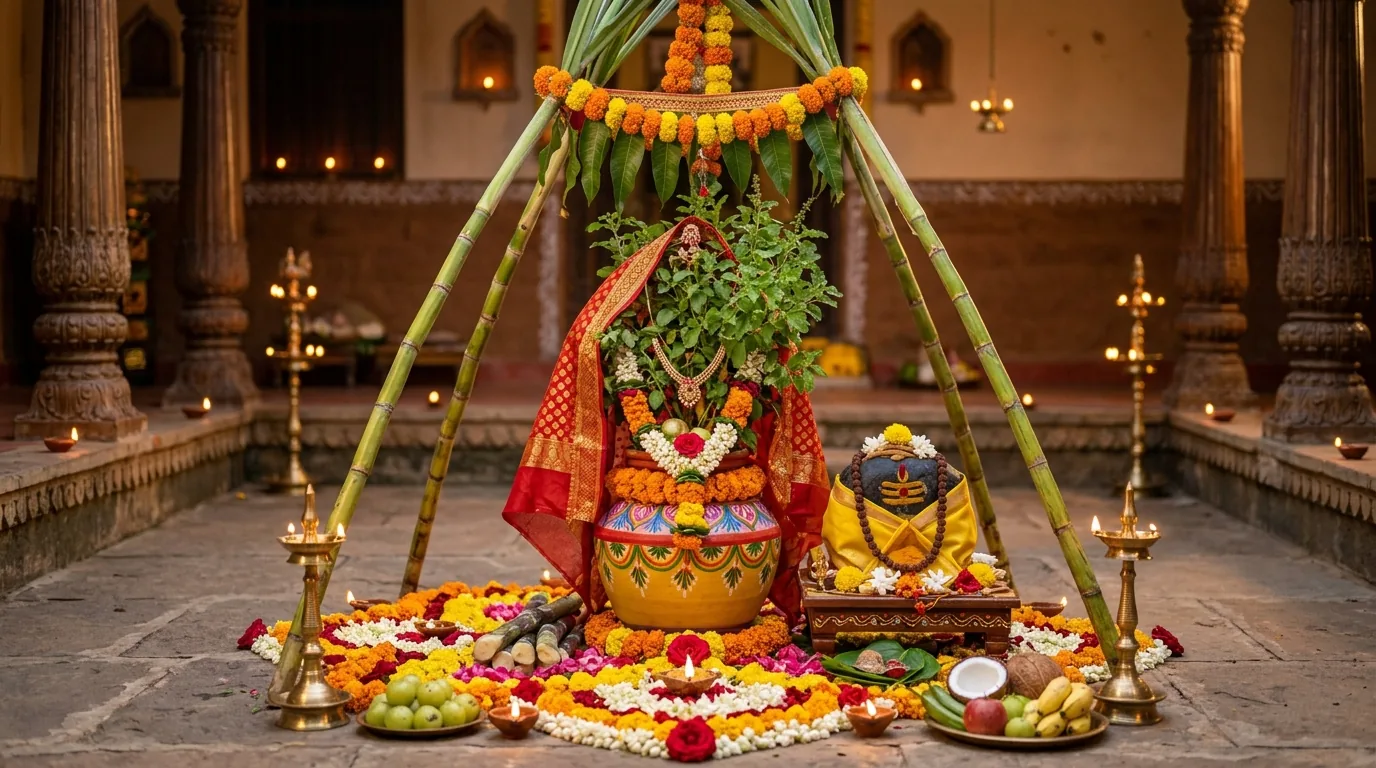
Place four sugarcane stalks with leaves upright at the corners of the design. Tie the top leaves together using a red sacred thread (Mauli) to form a canopy or mandap. Place a small stool in the center, cover it with a yellow silk cloth, and install the idol of Lord Shaligram or Vishnu.
Step 3: Offering Seasonal Fruits and Tubers
In an earthen plate or brass tray, arrange the water chestnuts, roasted sweet potatoes, berries, guava, amla, radish, makhana, and seasonal fruits. Offer yellow sandalwood, roli, akshat, and a garland of yellow marigolds to the Lord. An offering to Lord Vishnu is considered incomplete without Tulsi leaves, so be sure to include them.
Step 4: Lighting Lamps and Waking the Lord
Light 11, 21, or 51 earthen lamps around the mandap and throughout the house. Afterward, all family members gather to play a rhythmic sound on a bronze or brass plate using a rolling pin or spoon, while chanting traditional songs to awaken Lord Vishnu from his slumber.
🎶 Dev Uthani Ekadashi Awakening Song (Utho Deva Lyrics)
Traditional lyrics sung while playing the bronze plate
Utho Deva, baitho Deva, aanguriya chatkao Deva.
Kharak khao, khand khao, ber-singhade khao Deva॥
Kunware ko byah karao, byahe ko gauna karao Deva.
Ann-dhan ke bhandar bharo, vipada sari door haro Deva॥
Utho Deva, jago Deva, jai-jaikar manao Deva॥
Meaning: O Lord! Wake up from your four-month slumber, stretch your limbs. Accept these new fruits, berries, and water chestnuts. Bless the unmarried with marriage, bless the married with children and happiness, and fill our homes with abundance, removing all our troubles.
The Complete Vrat Katha of Dev Uthani Ekadashi as described in the Padma Purana
The Padma Purana (Uttarakhand) and Skanda Purana contain a detailed and highly beneficial account of Prabodhini Ekadashi. Once, Devarshi Narada asked Lord Brahma: "O Grandfather! What is the significance of the Ekadashi of the Shukla Paksha in the month of Kartik? What fruits do souls attain by fasting on this day?"
Lord Brahma replied with a gentle smile: "O Narada! Prabodhini Ekadashi destroys sins, grants merit, and ultimately leads to salvation (Moksha). The fruits that cannot be attained even through Ashwamedha or a thousand Rajsuya Yajnas are easily attained simply by observing this Ekadashi fast with devotion."
The Mystery of Shankhasura's Defeat and Lord Vishnu's Four-Month Yog Nidra
In ancient times, there lived a powerful and wicked demon named Shankhasura. He caused chaos in all three worlds, expelled the gods from heaven, and stole the Vedas, hiding them in the depths of the ocean. With the loss of the Vedas, religion, sacrifices, and good deeds began to vanish. The gods, in distress, sought refuge with Lord Vishnu.
Hearing the desperate pleas of the gods, Lord Hari took the Matsya (fish) avatar, entered the ocean, and fought a fierce battle against Shankhasura for many years. Finally, the Lord killed Shankhasura, recovered the Vedas, and returned them to the gods and sages.
Due to this long and intense battle, Lord Vishnu became extremely exhausted. He then entered into Yog Nidra, resting on the serpent Sheshnag in the Ksheer Sagar. The Lord told the gods that he would remain in this slumber for four months, from Ashadha Shukla Ekadashi (Harishayani) to Kartik Shukla Ekadashi (Prabodhini). These four months are called 'Chaturmas'. On the day of Kartik Shukla Ekadashi, when gods and devotees offer prayers, the Lord awakens from his slumber and showers infinite grace upon his devotees.
The Sacred Connection Between Dev Uthani Ekadashi and Tulsi Vivah
Devotees often wonder if Dev Uthani Ekadashi and Tulsi Vivah fall on the same day. According to religious scriptures, they are deeply connected, but the rituals for both are distinct:
- Dev Uthani Ekadashi (November 21, 2026): This day is primarily dedicated to the awakening of Lord Vishnu, the sugarcane mandap ritual, offering tubers/fruits, and fasting.
- Tulsi Vivah (November 22, 2026 / Dwadashi Tithi): In most Sanatan traditions, the marriage of Tulsi and Lord Shaligram is performed on the day following Ekadashi, i.e., Kartik Shukla Dwadashi. In some regions, wedding rituals begin during the twilight hours of Ekadashi.
If you want detailed information on the Vedic method of Tulsi Vivah, the Kanyadaan resolution, and the required decoration items, be sure to read our special article: Tulsi Vivah 2026: Correct Date, Puja Method, Item List, and Story.
10 Strict Rules for Dev Uthani Ekadashi: Do's and Don'ts
The Ekadashi fast is considered the crown jewel of all fasts. Scriptures mandate certain behaviors on this day to ensure the full spiritual benefit of the fast is attained:
✅ Do's
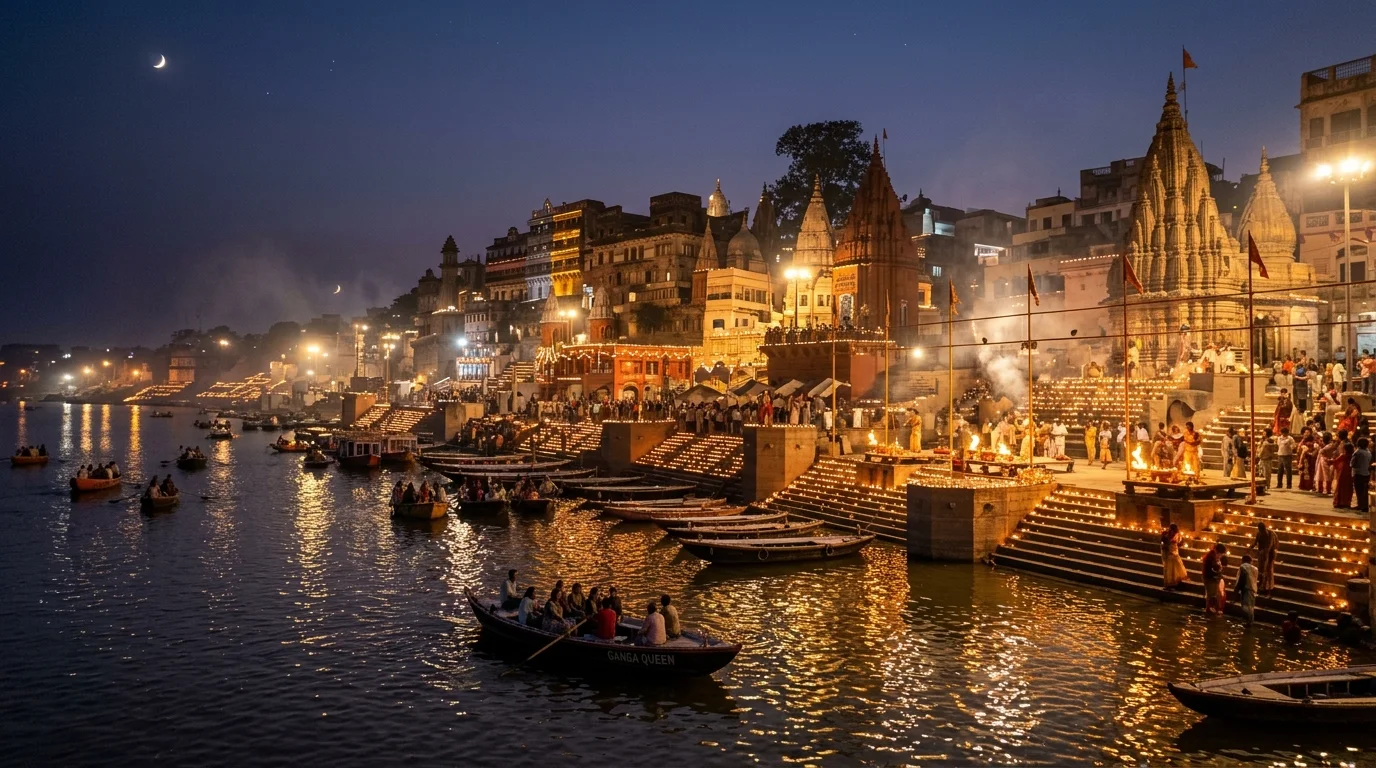
- Wake up during Brahma Muhurta and bathe in a holy river, or add Ganga water to your bath.
- Wear clean yellow clothes throughout the day and chant the mantra "Om Namo Bhagavate Vasudevaya".
- Build a beautiful sugarcane mandap in the courtyard and light 11 or 21 lamps.
- Donate seasonal fruits, sesame, grains, and clothes to the poor and Brahmins.
- Stay awake at night (Jagran) and recite hymns and the Vishnu Sahasranama.
❌ Don'ts
- Avoid Rice: Eating rice on Ekadashi is considered a sin equivalent to consuming the flesh of the sage Medha.
- Plucking Tulsi Leaves: Never pluck Tulsi leaves on Ekadashi; keep them plucked from the previous day.
- Tamasic food (garlic, onion, meat, alcohol) is strictly prohibited in the house.
- Stay completely away from anger, lying, backbiting, and conflict.
- Do not eat from bronze utensils and avoid sleeping during the day.
Vedic Mantras for Awakening Lord Vishnu
On the evening of Dev Uthani Ekadashi, while waking Lord Shaligram and Lord Vishnu from their slumber, one should join their hands and recite these sacred verses:
Uttishthottishtha Govinda tyaja nidram jagatpate.
Tvayi supte Jagannatha jagat suptam bhavedidam॥
Uttishṭhe cheshṭate sarvamuttishthottishtha Madhava.
Gata megha viyachchaiva nirmalam nirmala dishah॥
Sacred Aarti of Lord Shri Vishnu
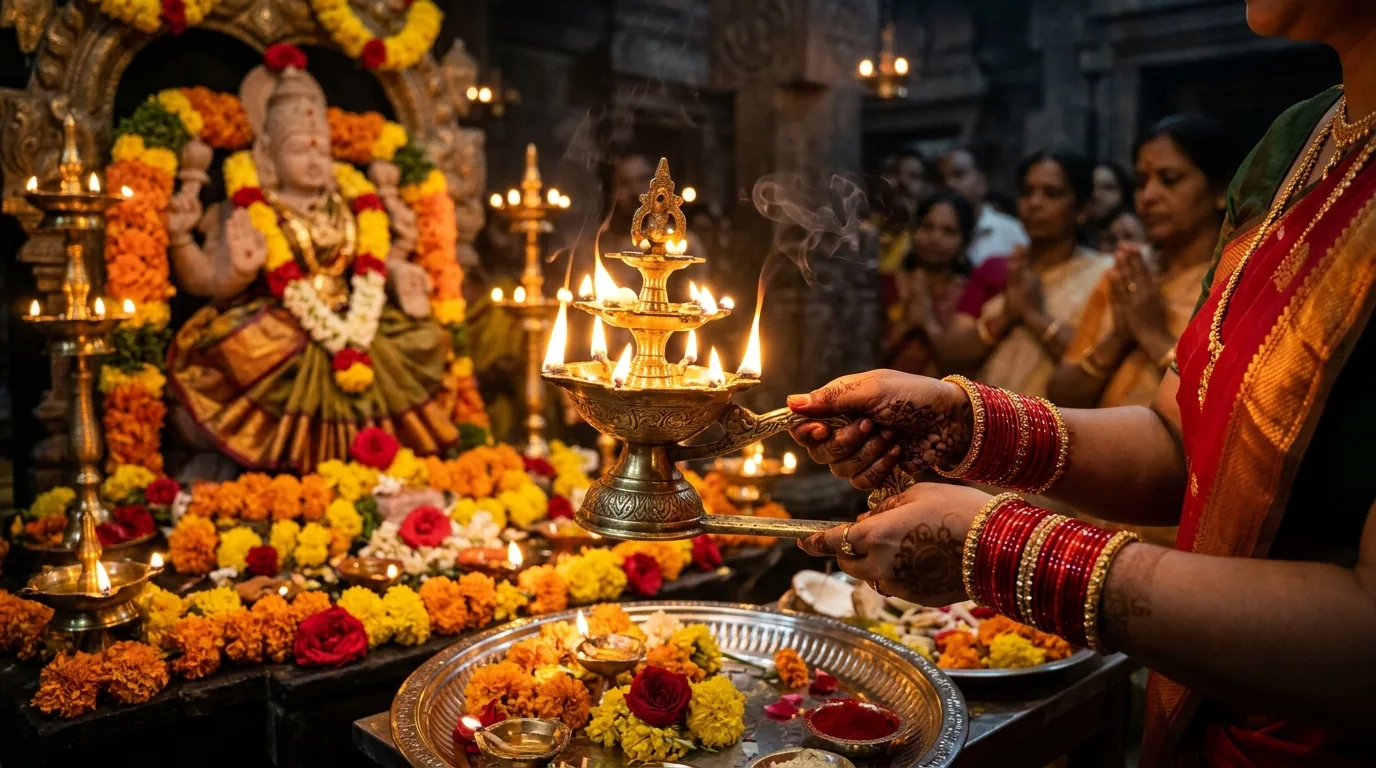
At the conclusion of the Dev Uthani Ekadashi puja, light a ghee lamp with all family members and sing this sacred Aarti of Lord Shri Hari with devotion:
॥ Om Jai Jagdish Hare Aarti ॥
The most auspicious hymn for Lord Shri Vishnu
Om Jai Jagdish Hare, Swami Jai Jagdish Hare.
Bhakt janon ke sankat, das janon ke sankat, kshan mein door kare॥
Om Jai Jagdish Hare...
Jo dhyave phal pave, dukh binse man ka.
Sukh sampati ghar ave, kasht mite tan ka॥
Om Jai Jagdish Hare...
Mat-pita tum mere, sharan gahun kiski.
Tum bin aur na dooja, aas karun jiski॥
Om Jai Jagdish Hare...
Tum puran paramatma, tum antaryami.
Parabrahma parameshwar, tum sab ke swami॥
Om Jai Jagdish Hare...
Tum karuna ke sagar, tum palan-karta.
Main moorakh khal kami, kripa karo bharta॥
Om Jai Jagdish Hare...
Deenbandhu dukhaharta, tum thakur mere.
Apne hath uthao, dwar pada tere॥
Om Jai Jagdish Hare...
Vishay-vikar mitao, paap haro Deva.
Shraddha-bhakti badhao, santan ki seva॥
Om Jai Jagdish Hare...
Tan-man-dhan sab kuch hai tera, Swami sab kuch hai tera.
Tera tujhko arpan, kya lage mera॥
Om Jai Jagdish Hare, Swami Jai Jagdish Hare...
Frequently Asked Questions (FAQs)
1. When is Dev Uthani Ekadashi 2026 - November 20 or November 21?
The Dev Uthani Ekadashi fast will be observed on November 21, 2026 (Saturday). Although the Ekadashi Tithi begins on November 20 at 01:42 PM, the fast is valid on November 21 due to the sunrise-based Udaya Tithi rule.
2. When and how to break the Dev Uthani Ekadashi 2026 fast?
Break the fast between 06:49 AM and 09:00 AM on November 22, 2026 (Sunday). At the time of breaking the fast, first offer food to Lord Vishnu, donate to the needy or Brahmins, and then break the fast by consuming Tulsi leaves or Amla.
3. Why is a sugarcane mandap made on Dev Uthani Ekadashi?
The new sugarcane harvest is ready in the month of Kartik. In Sanatan culture, there is a tradition of offering the first harvest of nature to God. The sugarcane mandap symbolizes sweetness, prosperity, and the growth of the lineage.
4. Do auspicious activities like weddings begin on Dev Uthani Ekadashi?
Yes! The four-month Chaturmas that began on Ashadha Shukla Ekadashi ends on this day. As soon as Lord Vishnu awakens, all auspicious rituals like weddings, Mundan, engagements, and housewarmings officially begin in Hindu tradition.
5. Why should Tulsi leaves not be plucked on Ekadashi?
According to mythological beliefs, Mother Tulsi herself observes a fast for Lord Vishnu on Ekadashi. Plucking Tulsi leaves on this day disturbs her meditation, so leaves should be plucked one day prior (Dashami).
Editorial Conclusion: Dev Uthani Ekadashi is a sacred festival of Indian culture that opens the doors to spiritual purification, family joy, and social auspicious events. Remember Lord Vishnu with a pure heart and honor him with the new grains and fruits provided by nature. Wishing you all a very happy Dev Uthani Ekadashi 2026!