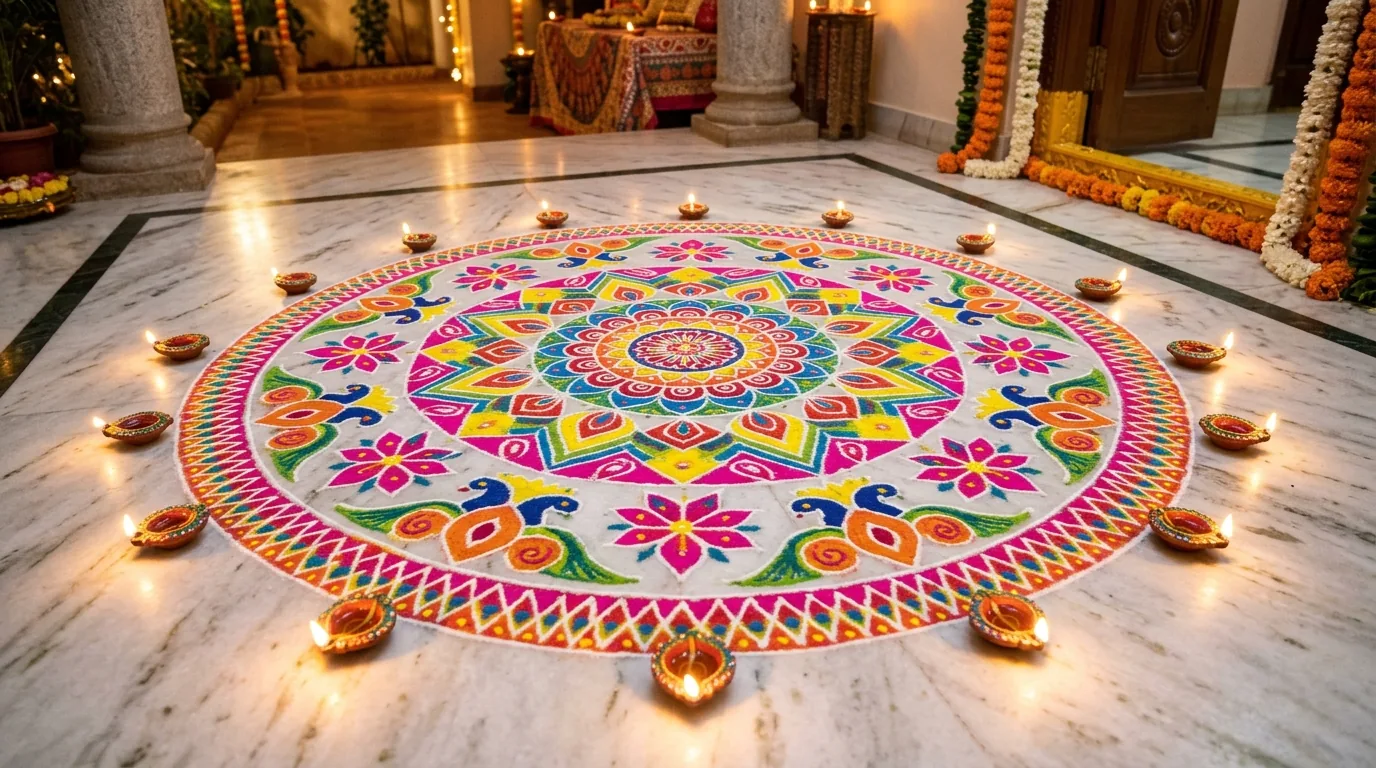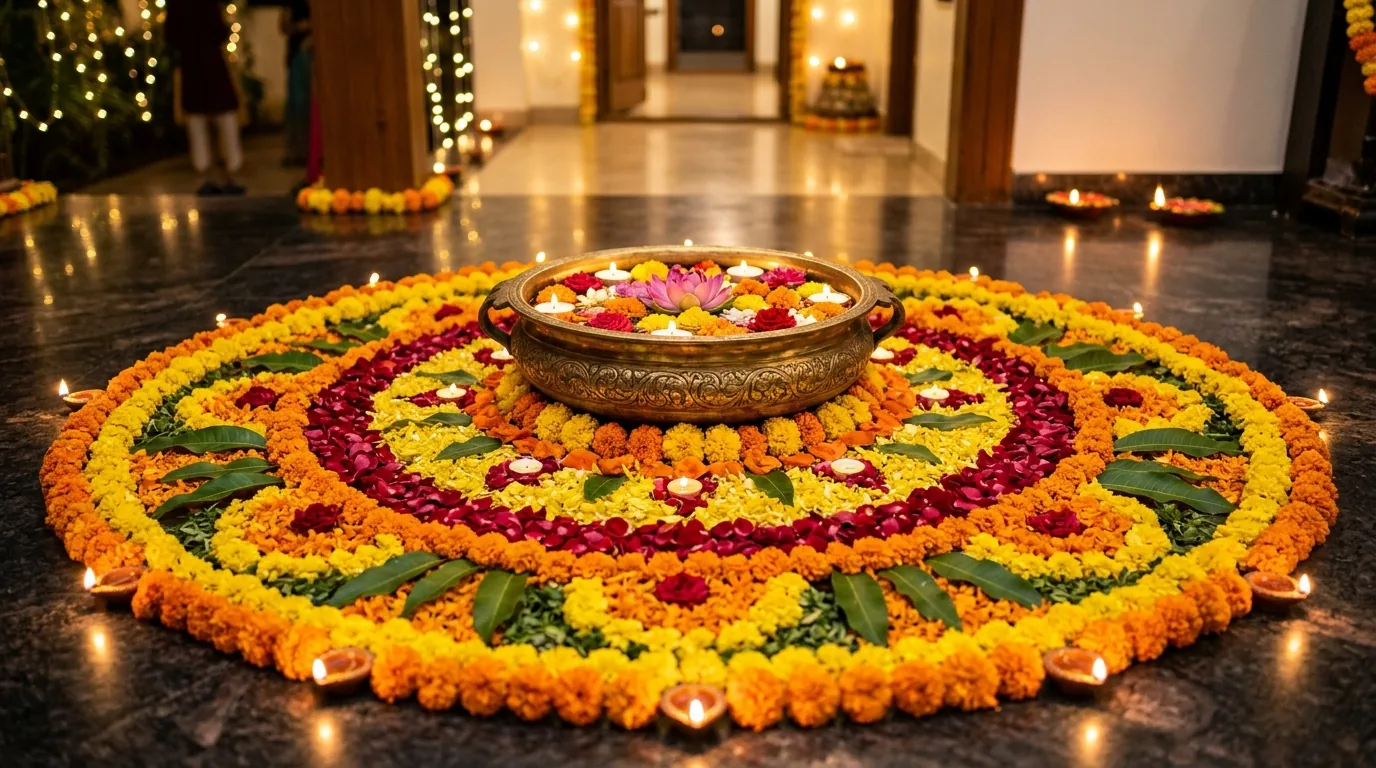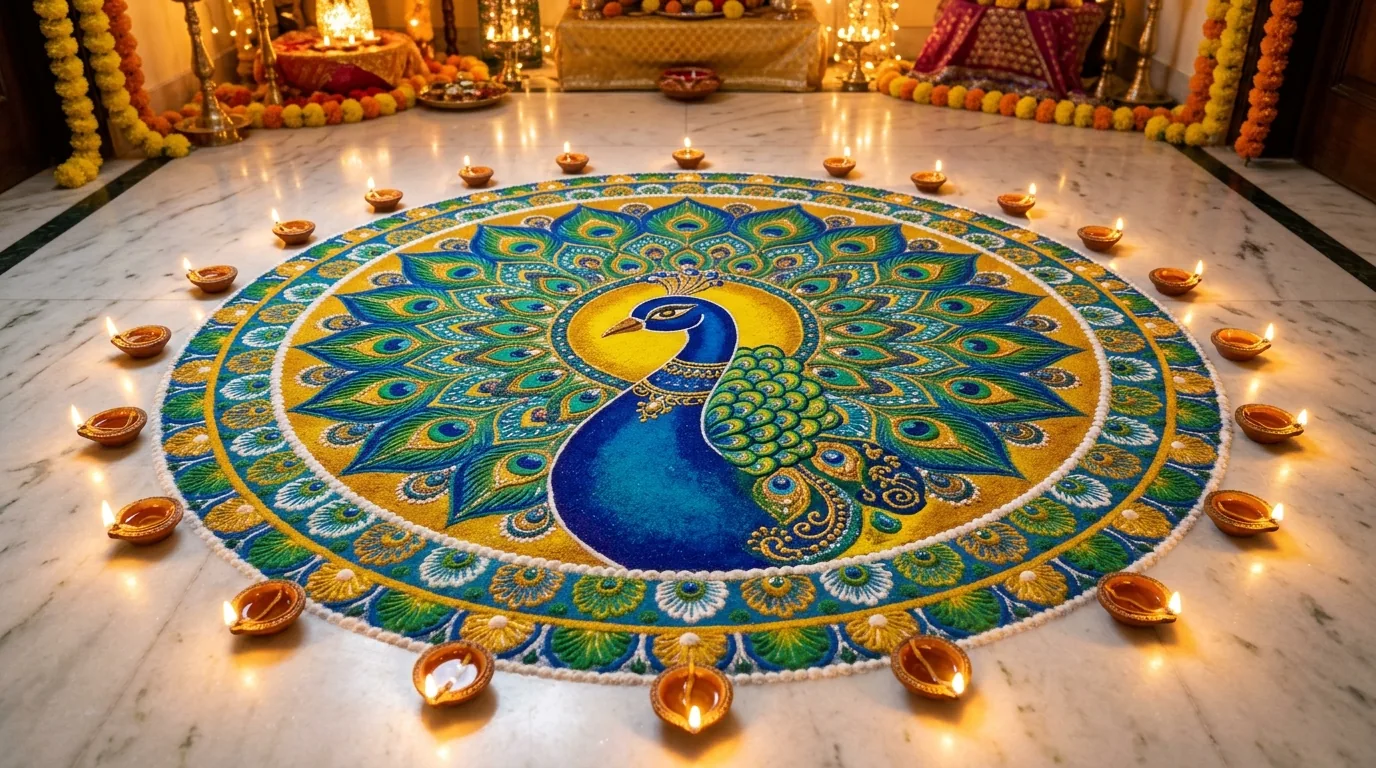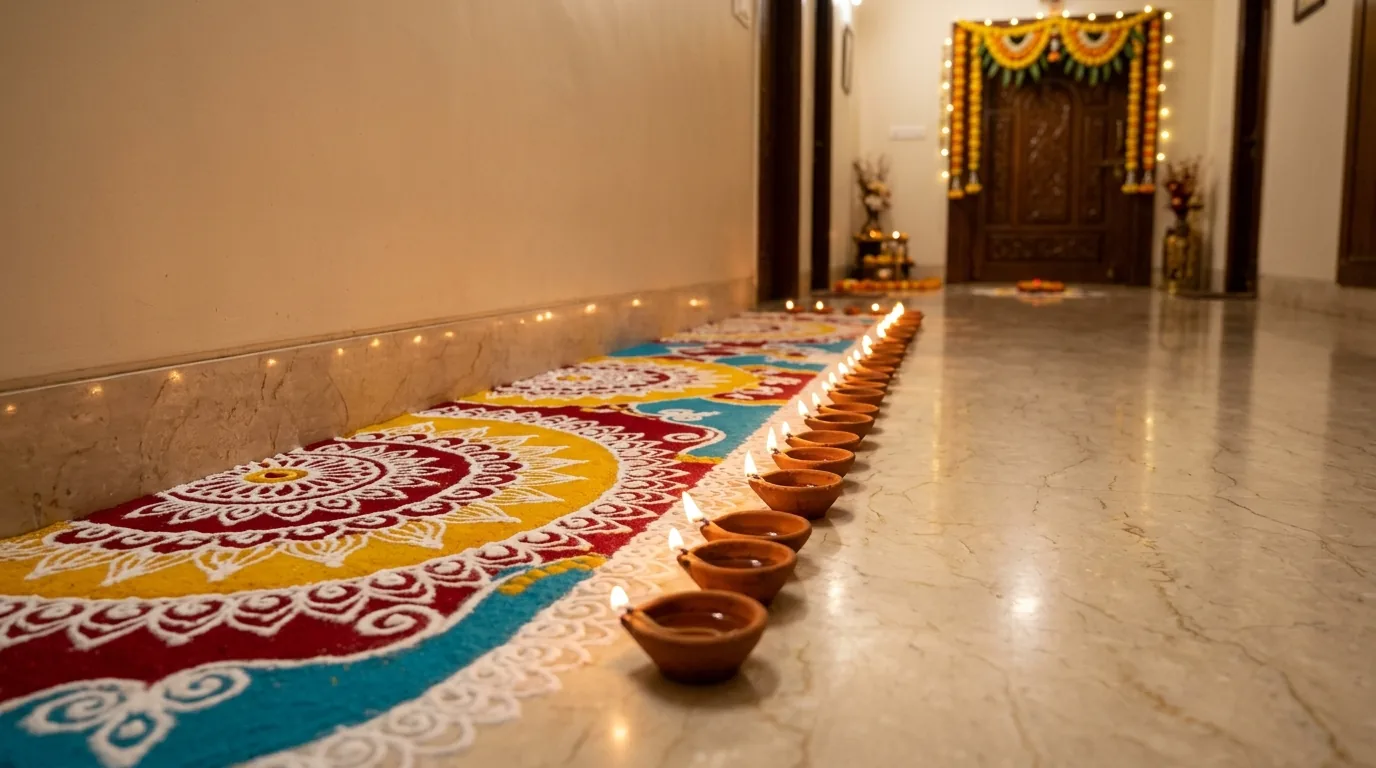
Dev Uthani Ekadashi and Tulsi Vivah Rangoli: [15+ Easy Designs] Tulsi Kyari, Sugarcane Mandap, Footprints & Aipan Patterns
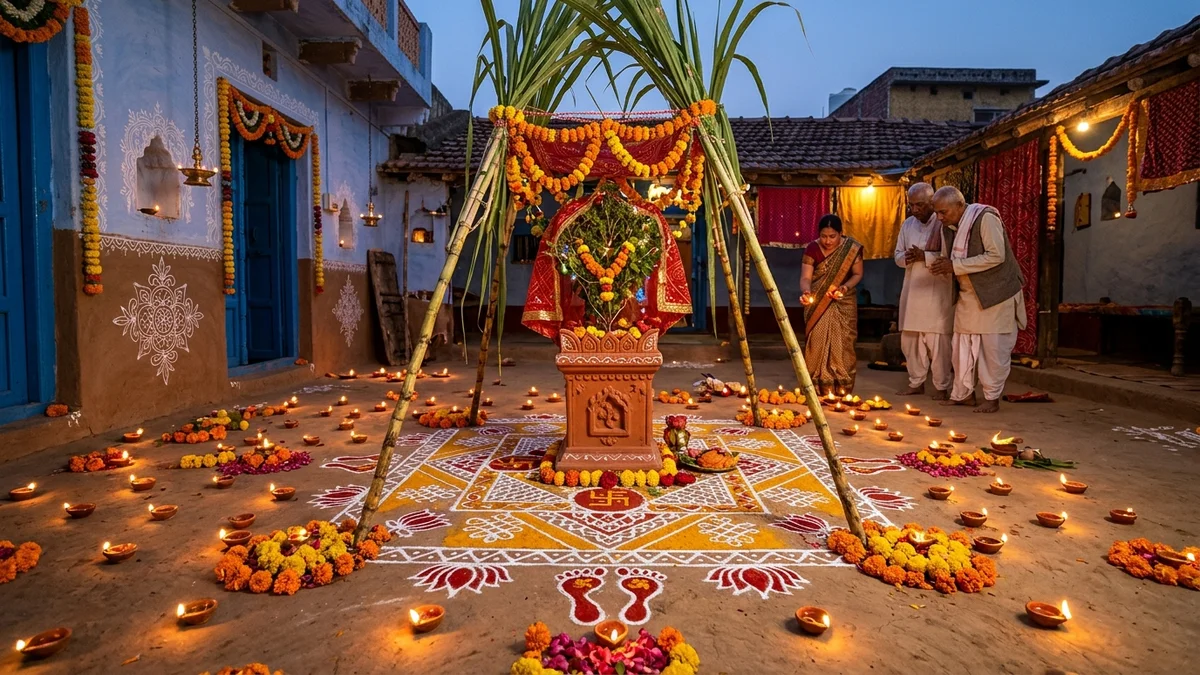 AI-generated illustration
KEY HIGHLIGHTS
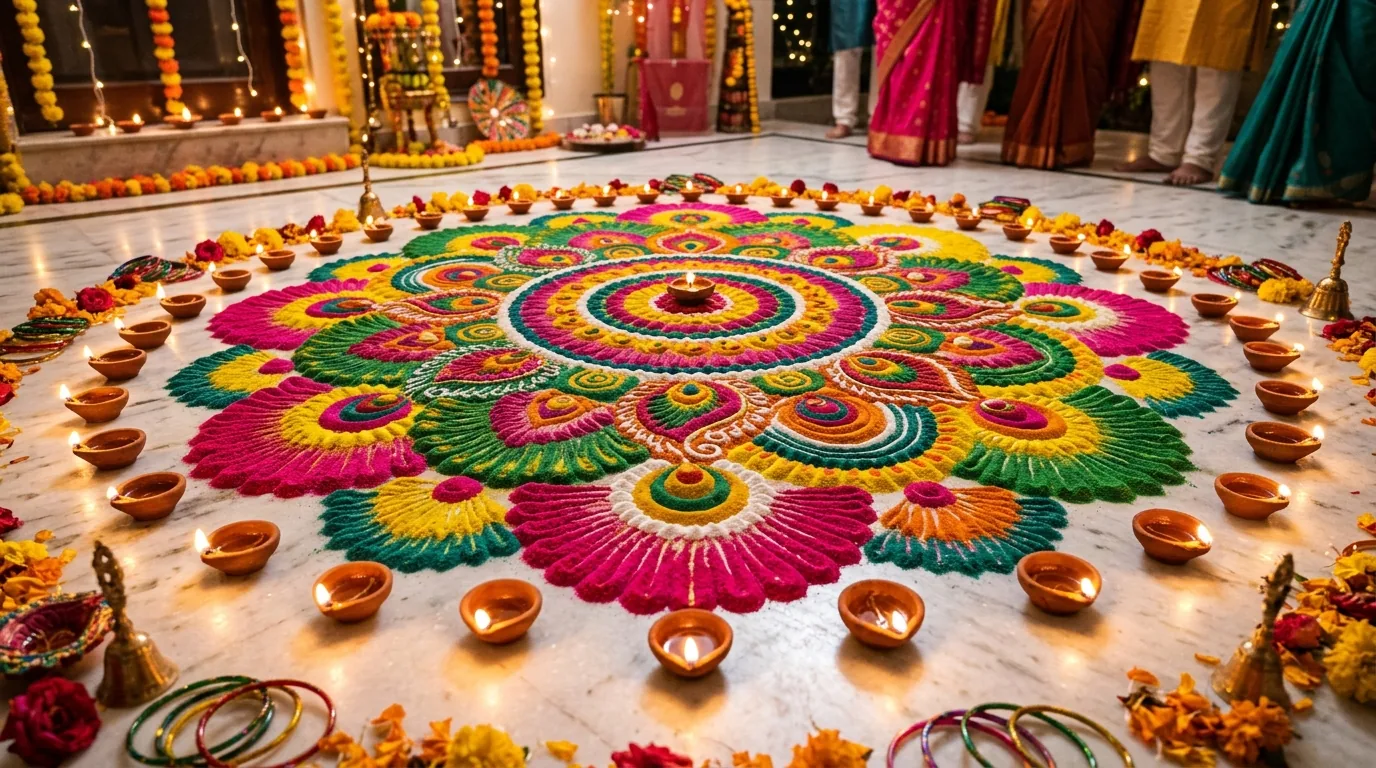
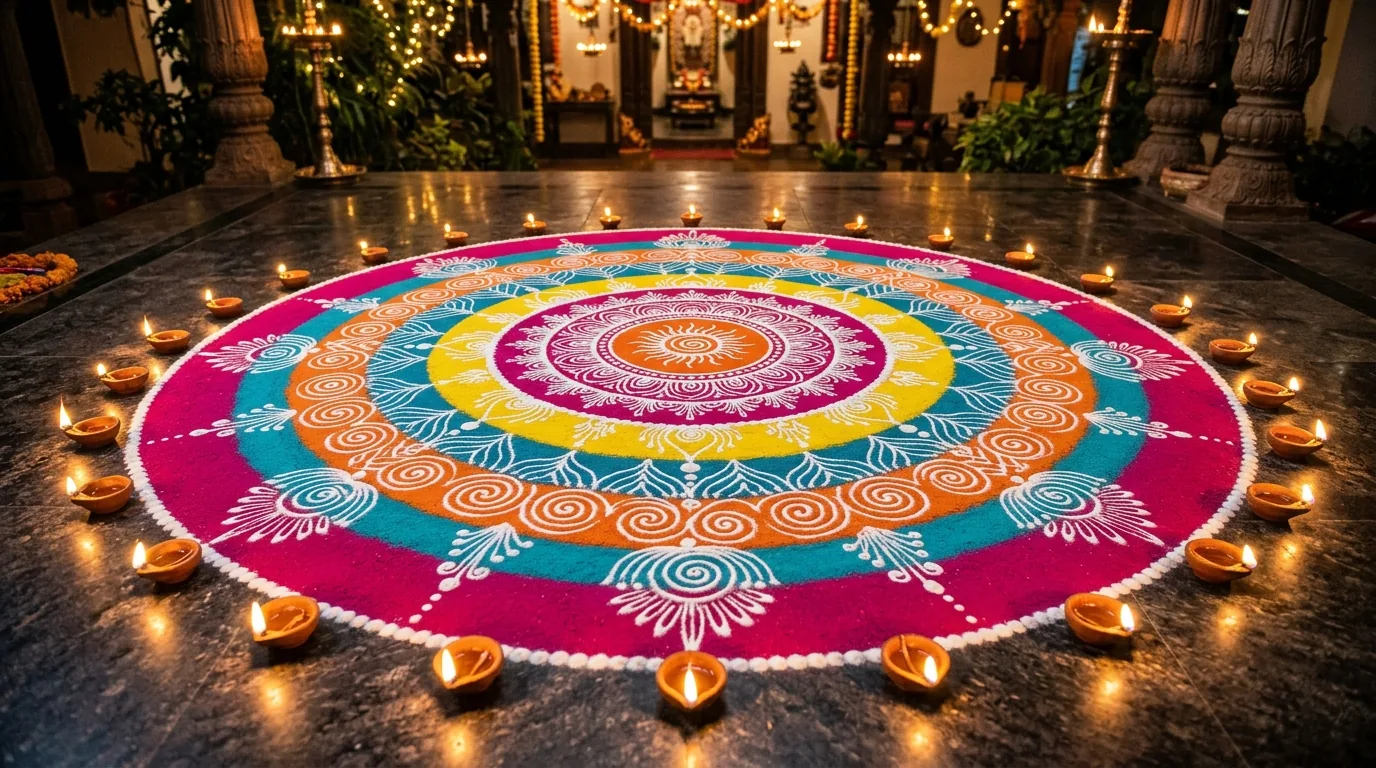
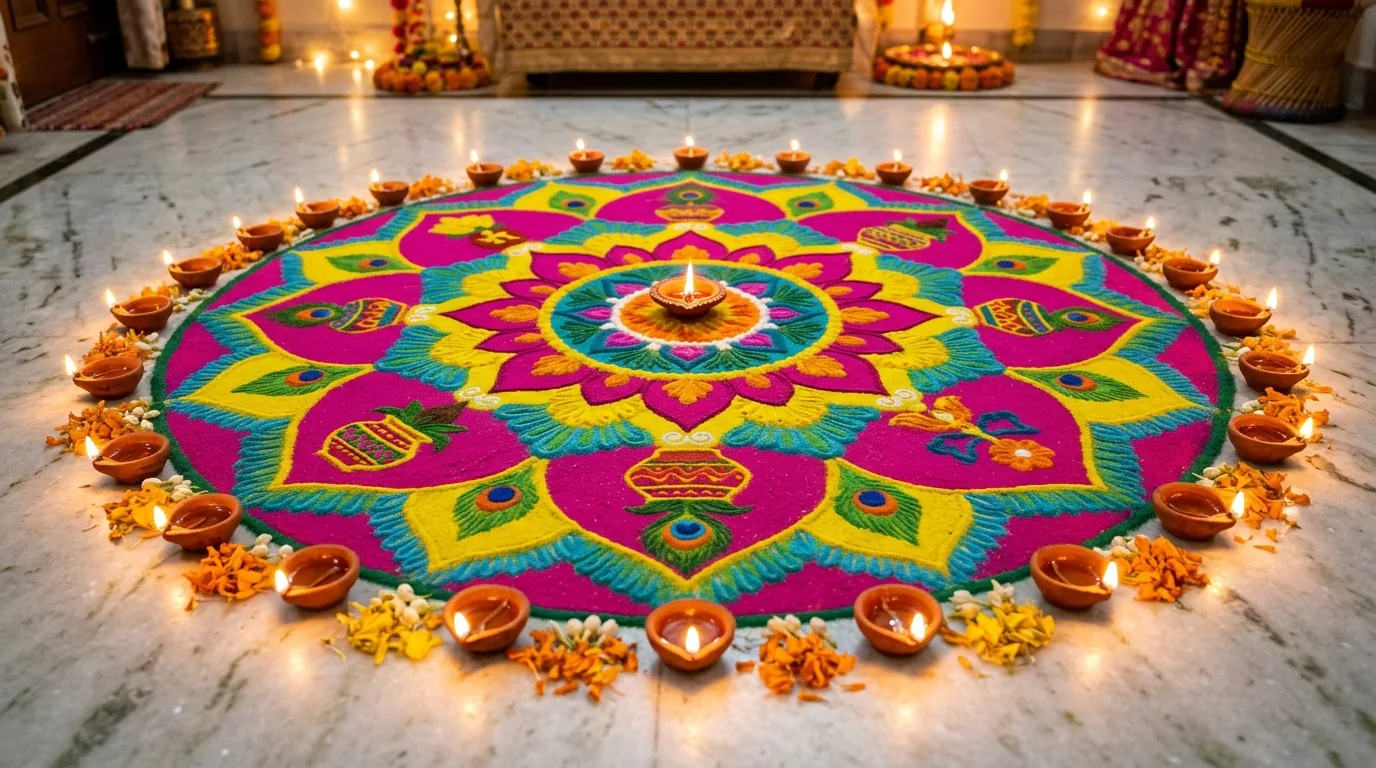
Celebrate Dev Uthani Ekadashi and Tulsi Vivah 2026 with 15+ stunning, easy-to-create rangoli designs. From intricate Tulsi courtyard borders and sugarcane mandaps to sacred Ashtakamal and Charan Paduka motifs, discover these beautiful patterns. Perfect for beginners, our 5-minute hacks will help you adorn your home with devotion and artistic flair this festive season.
Whether you prefer traditional Aipan art or are looking for easy Rangoli designs that can be made in 5 minutes, this special guide covers 15+ of the most beautiful and easy Chowk Rangoli designs for the Tulsi planter, sugarcane mandap, lotus flowers, and the Lord's divine footprints. Also, learn the essential rules to follow while creating Rangoli on Dev Uthani to ensure prosperity and blessings in your home.
Table of Contents
Quick Guide: Key Points for Tulsi Vivah & Dev Uthani Chowk Rangoli
Soaked rice flour paste (pithar), red ochre (geru), turmeric powder, vermilion (roli), and fresh marigold and rose petals.
Lotus flower (the seat of Lord Vishnu), conch (shankh), chakra, swastika, Tulsi leaves, and the Lord's footprints leading from the main entrance to the mandap.
Create the Rangoli in a space where it will not be stepped on. Be sure to place earthen lamps (diyas) at the four corners of the Rangoli at night.
Religious Significance of 'Chowk Poorna' on Tulsi Vivah and Dev Uthani Ekadashi
Since the Vedic era, 'Chowk Poorna' has been considered mandatory to sanctify the ground before any sacred ritual or the installation of a wedding mandap. The Vaishnava Khand of the Skanda Purana mentions that when Lord Vishnu awakens from his 4-month-long cosmic slumber (Ksheersagar Yoga Nidra), devotees welcome him from the threshold of their homes to the place of worship with divine Rangolis and Mandanas.
Red ochre (geru) symbolizes the Earth element, while white rice flour (pithar) represents the Moon and peace. When a geometric Chowk is created at the confluence of these two at the base of the Tulsi planter, it ceases to be just an art form; it transforms into a Sacred Geometric Yantra that attracts cosmic energy into the home.
15+ Best Tulsi Vivah & Dev Uthani Chowk Rangoli Designs (Top Categories)
Depending on your convenience and available space, you can choose any of the enchanting designs from the 5 major categories below:
1. Tulsi Kyari Base Border Motifs
These designs created around the Tulsi planter or pedestal give the plant the appearance of a grand divine shrine:
Design 1: Circular Ashtadal Lotus
Draw a circle around the Tulsi planter with white chalk. Create an eight-petaled lotus (Ashtakamal) and fill it with yellow and orange vermilion. This is considered the direct seat of Lord Vishnu.
Design 2: Tulsi Leaf & Kalash Border
Create a series of small Tulsi leaves and auspicious Kalash (pots) along the base of the four walls of a square planter. Place small red dots of kumkum in between.
Design 3: 3D Diya Rim Rangoli
Create slots for 8 or 16 small earthen lamps in the outer circle of the planter. As evening falls and these ghee lamps are lit, the entire planter glows with a golden aura.
2. Sugarcane Mandap Ceremonial Grid
During Tulsi Vivah, a mandap of 4 sugarcane stalks is constructed. The Chowk created in the center of this mandap is highly significant:
Design 4: Quadrilateral Vedic Swastika Chowk
Paint a 2x2 foot square base with red ochre. On top of this, create a large Swastika in the center using pithar (rice paste) and carve symbols of the Sun, Moon, Conch, and Mace at the four corners.
Design 5: Wedding Knot & Kalash Chowk
Create the form of the wedding knot (gathbandhan) between Shaligram and Tulsi Ji in the center of the mandap. Draw 4 small Kalash on the edges with mango leaves depicted on them.
Design 6: Petal Rangoli Carpet
Cover the entire floor of the mandap with fresh yellow marigold and red rose petals. In the center, create an auspicious 'Om Namo Bhagavate Vasudevaya' chakra using white rice flour.
3. Lakshmi-Narayan Divine Footsteps (Charan Paduka)
Footprints are created as a symbol of the Lord's arrival, leading from the main entrance to the courtyard and the worship mandap:
Design 7: Divine Pair of Footprints
Create one footprint for Lord Vishnu (marked with conch, chakra, and flag) and the other for Goddess Lakshmi (marked with lotus and auspicious signs). Draw both pairs facing inward toward the house.
Design 8: Footprints Seated on Lotus
Create a small lotus flower with pink Rangoli and carve delicate footprints in the center with white rice paste. It looks extremely enchanting and sacred.
Design 9: Kumkum-Turmeric Footprint Path
Dip the palm and the back of your fingers into a solution of vermilion and turmeric to stamp actual footprints on the floor. This is the fastest and most traditional method for beginners.
4. Traditional Aipan & Folk Mandana Art
The 'Aipan' art of Kumaon (Uttarakhand) and the 'Mandana' art of Rajasthan and Madhya Pradesh are especially revered on Dev Uthani:
Design 10: Kumaoni Tulsi Aipan Strip
On a deep red background of red ochre, traditional patterns of vines, buds, swastikas, and water channels are drawn using the ring finger dipped in white rice paste.
Design 11: Rajasthani Dev Prabodhini Mandana
A Mandana created by combining geometric triangles, squares, and circles. It uses lime and red ochre, which remains vibrant for many days.
Design 12: Mithila Aripan (Chowk)
In the Mithilanchal region of Bihar, 'Aripan' is made for Tulsi Vivah. It features ancient Mithila motifs like betel leaves, bamboo baskets, conch shells, and fish.
5. Beginners 5-Minute Quick Hacks
If you are short on time, you can prepare a grand Rangoli in just 5 minutes with the help of these household tools:
Design 13: 3D Petals with Fork & Spoon
Place small dots of colored powder on the floor and pull them inward with a fork. Natural lotus petals will emerge in seconds.
Design 14: Strainer Shading Base
Put yellow color in a small tea strainer and rotate it. A uniform circular base will be ready. You can immediately write 'Tulsi Vivah' on it with white chalk.
Design 15: Bangle & Bottle Cap Border
Place old bangles around the planter and fill them with vermilion. As you lift the bangles, you will have precise, symmetrical, and clean circles.
5 Essential Rules & Precautions to Remember While Making Rangoli
Synthetic market colors contain lead and chemicals. Create the Rangoli at least 6 inches away from the planter's soil or the plant's roots. Use only natural rice flour and turmeric right next to the planter.
The Lord's footprints should always be made pointing from outside to inside. Never draw the toes of the footprints facing outside the house, as this is considered an indicator of the departure of wealth and Lakshmi.
After the worship is complete, do not sweep away the sacred Chowk or Rangoli with a broom. The next day, respectfully collect it with a clean cloth or by sprinkling water, and immerse it at the base of a tree or in flowing water.
After preparing the Chowk, light a ghee lamp on it and recite our detailed articles on Tulsi Chalisa, Namashtak, and Aarti, as well as the 108 Sacred Names of Lord Vishnu. Also, be sure to check the information on the upcoming Dev Uthani Ekadashi Vrat Katha and Shubh Muhurat.
Frequently Asked Questions (FAQs)
Q1: What is the most auspicious material for creating a Chowk on Dev Uthani Ekadashi?
Answer: Rice flour paste (pithar/aipan) and red ochre are considered the most sacred materials for Dev Uthani and Tulsi Vivah. Along with these, turmeric, kumkum, and fresh marigold flowers are highly auspicious.
Q2: At what time should the Rangoli be made near the Tulsi planter?
Answer: It is best to make the Rangoli after bathing in the morning or during the twilight hour (Godhuli Bela), about 1 hour before the Tulsi Vivah puja, so that it is fully ready and dry by the time you light the lamps at sunset.
Q3: Can a Chowk be made on a small balcony in a flat or apartment?
Answer: Yes, absolutely. If there is limited space on the balcony, you can create the Chowk on a wooden pedestal (paata) using red ochre and white paint or colors, and place the Tulsi planter on it. This method is also fully fruitful.
Q4: Which symbol is most essential to draw under the sugarcane mandap?
Answer: It is considered most auspicious to draw an eight-petaled lotus or a Swastika in the center of the sugarcane mandap, and symbols of the conch, chakra, mace, and lotus at the four corners. Lord Shaligram and Tulsi Ji are seated on this.
Q5: Can black or dark blue colors be used in the Rangoli?
Answer: The use of black or dark brown colors is strictly prohibited in auspicious festivals like Tulsi Vivah and Dev Uthani. Only auspicious and sattvic colors like yellow, orange, red, pink, green, and white should be used.