The Correct Way to Decorate a Chhath Puja Soop: What to Place in Each Soop and How to Arrange the Daura
 AI-generated illustration
Chhath Puja 2026 (Nahay-Khay to Paran) has concluded. This article is preserved for ritual, cultural, and spiritual reference. To explore upcoming festivals and auspicious muhurats, check the links below:
KEY HIGHLIGHTS
Discover the authentic traditions of Chhath Puja, from artfully arranging bamboo and brass soops to the specific offerings required for each. Learn the sacred distinctions between Sandhya and Usha Arghya, and master the precise rituals for preparing the daura, ensuring every detail honors this profound festival of devotion and purity.
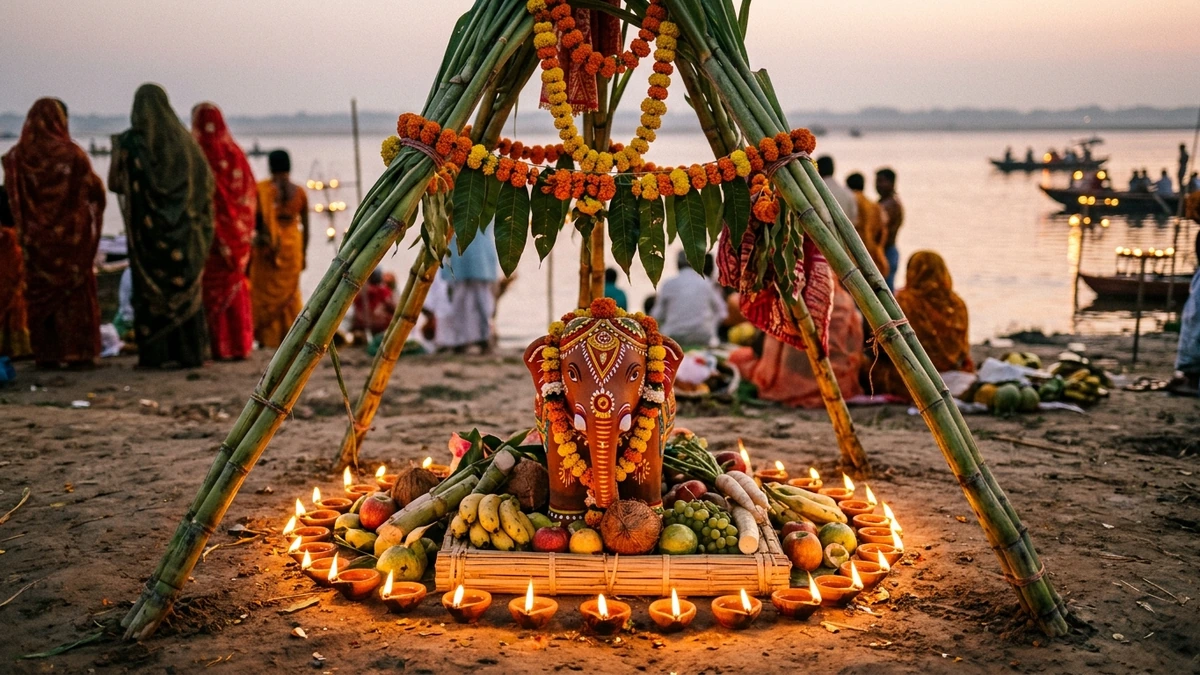
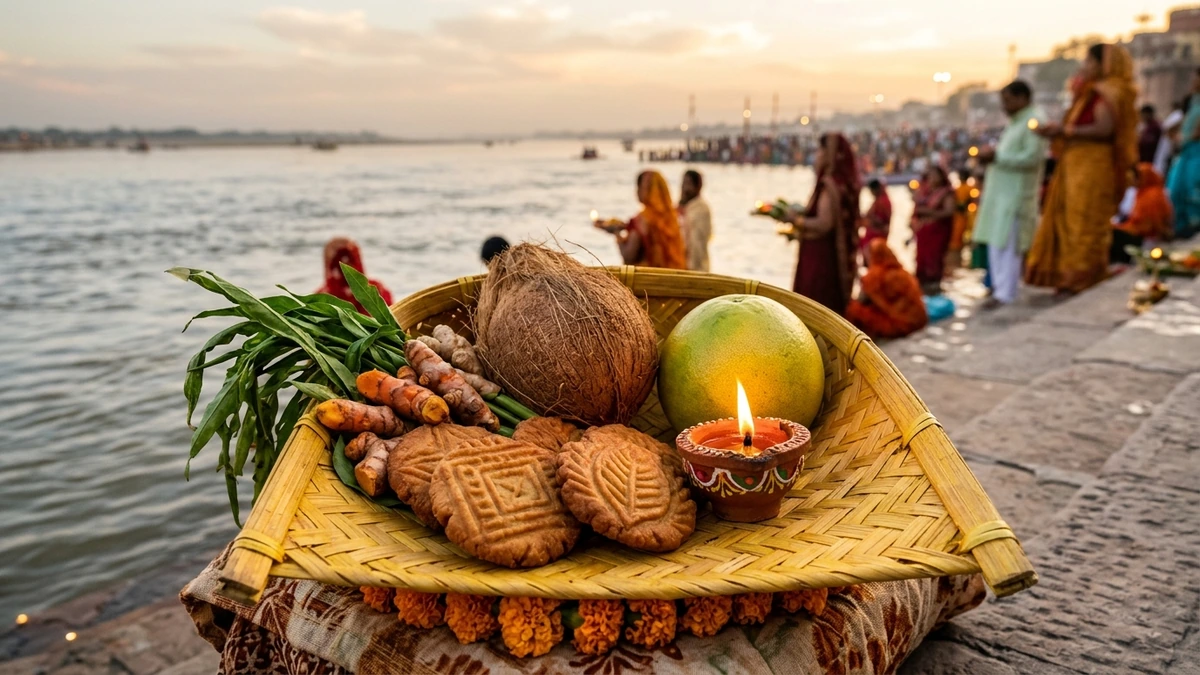
During the grand festival of Chhath, the Soop (bamboo winnowing basket) and Daura (large bamboo basket) are not merely ritual vessels; they are sacred offerings dedicated to the Sun God and Nature. When a devotee stands in the cool waters of a river or pond, lifting the soop with both hands to offer Arghya to the setting and rising sun, every single item arranged within holds profound spiritual and scientific significance. If you are observing the Chhath fast for the first time or wish to learn the traditional, scripturally-sanctioned method of decorating the soop, this comprehensive guide will prove to be extremely helpful.
Table of Contents
A Brief Summary of Rules for Decorating Soop and Daura
- Purity of the Bamboo Soop: The soop is cleaned with Gangajal and marked with 5 or 7 dots using a paste of raw rice (pithar) and thick red vermilion (sindoor).
- Order of Items: Place betel leaves and crispy Thekua at the bottom, heavier fruits (coconut, pomelo, pineapple) in the middle, and lighter fruits along with a lit earthen lamp on top.
- Sandhya vs. Usha Arghya: After the evening Sandhya Arghya, some fruits are replaced, and fresh Thekua and new fruits are arranged for the morning Usha Arghya.
Spiritual and Scientific Significance of the Bamboo Soop
In Sanatan scriptures, bamboo is considered a symbol of lineage growth and supreme purity. For Chhath Puja, bamboo soops and earthen vessels are preferred over gold, silver, or glass utensils. This serves as a testament to the fact that during Chhath, kings and commoners, the wealthy and the poor, are all equal.
Bamboo is lightweight, does not deteriorate upon contact with water, and is directly connected to nature. Some devotees also use brass soops based on their vows, but the bamboo soop remains paramount and mandatory.
Preparing the Soop: Applying Pithar and Sindoor
Before arranging the fruits in the soop, it undergoes a traditional purification process:
- Cleansing with Gangajal: After bringing the soop from the market, it is thoroughly wiped clean with a new cloth and Gangajal.
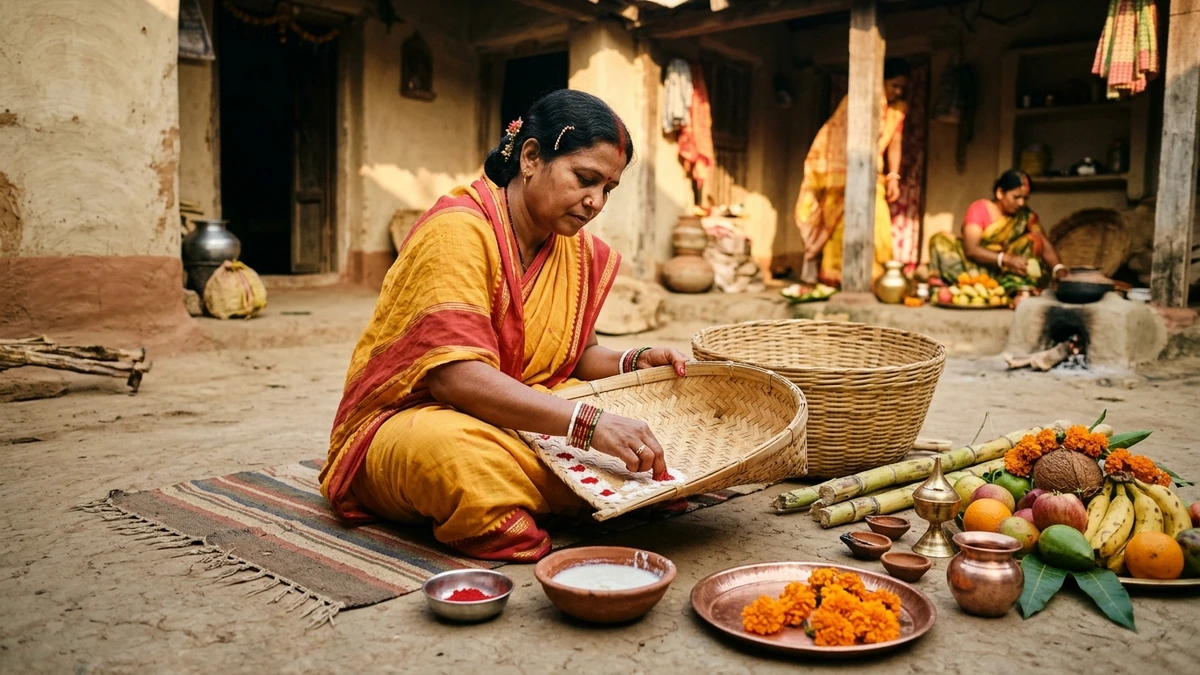
- Applying Pithar: Raw rice is soaked in water and ground finely on a grinding stone to make 'Pithar'. Sacred lines are drawn with this paste on the front and edges of the soop.
- Sindoor Dots: Once the Pithar dries, 5 or 7 auspicious dots (bindis) are applied using pure orange or red sindoor. This symbolizes the marital bliss and good fortune of Chhathi Maiya.
What is kept in the Soop? (Complete Soop Items)
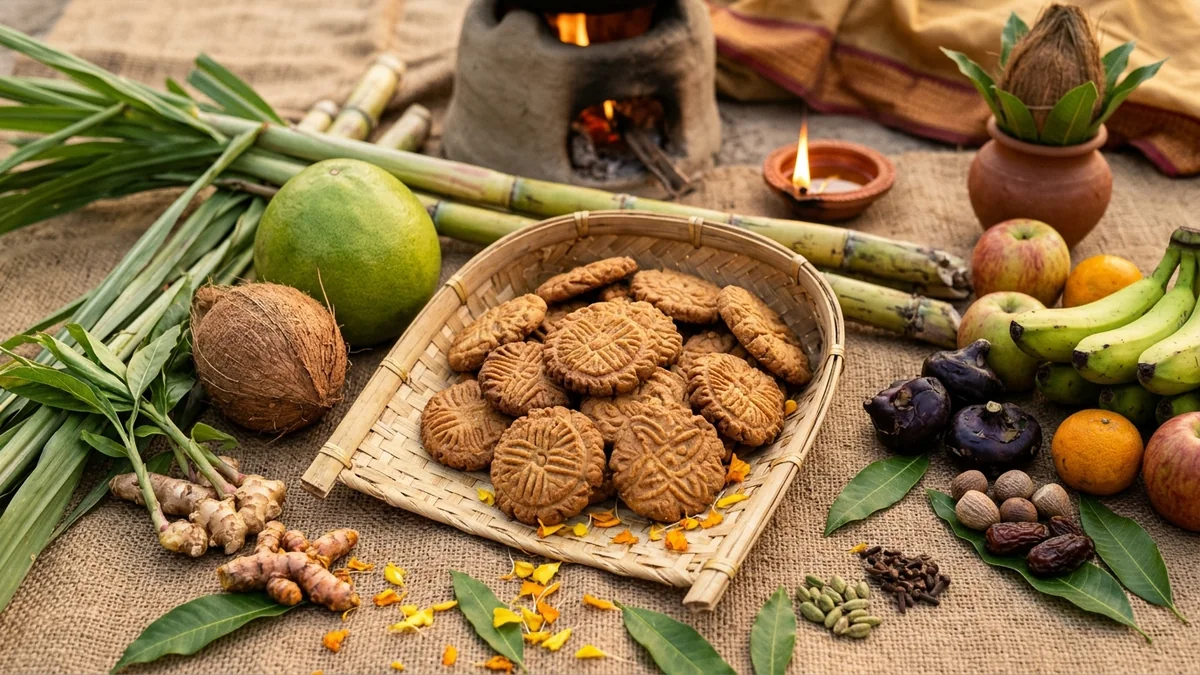
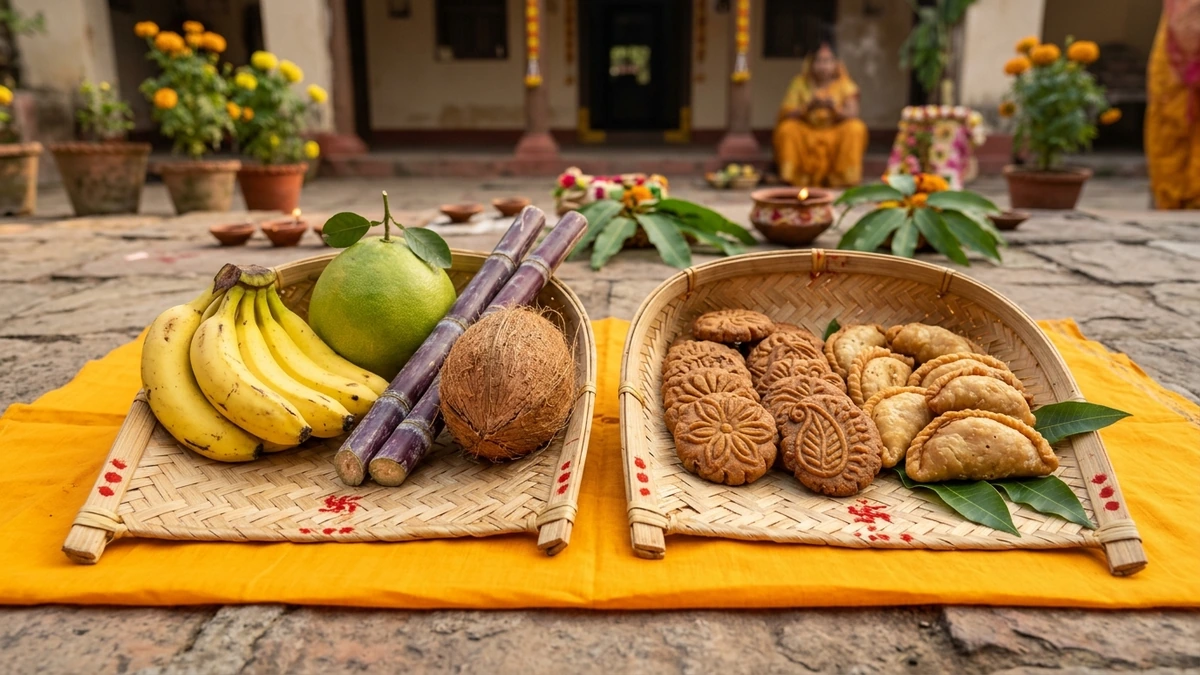
The following items are arranged systematically in an ideal Arghya soop:
| Item | Placement | Religious Significance |
|---|---|---|
| Betel leaves and Areca nut | At the base of the soop | Foundation for invoking deities and auspiciousness |
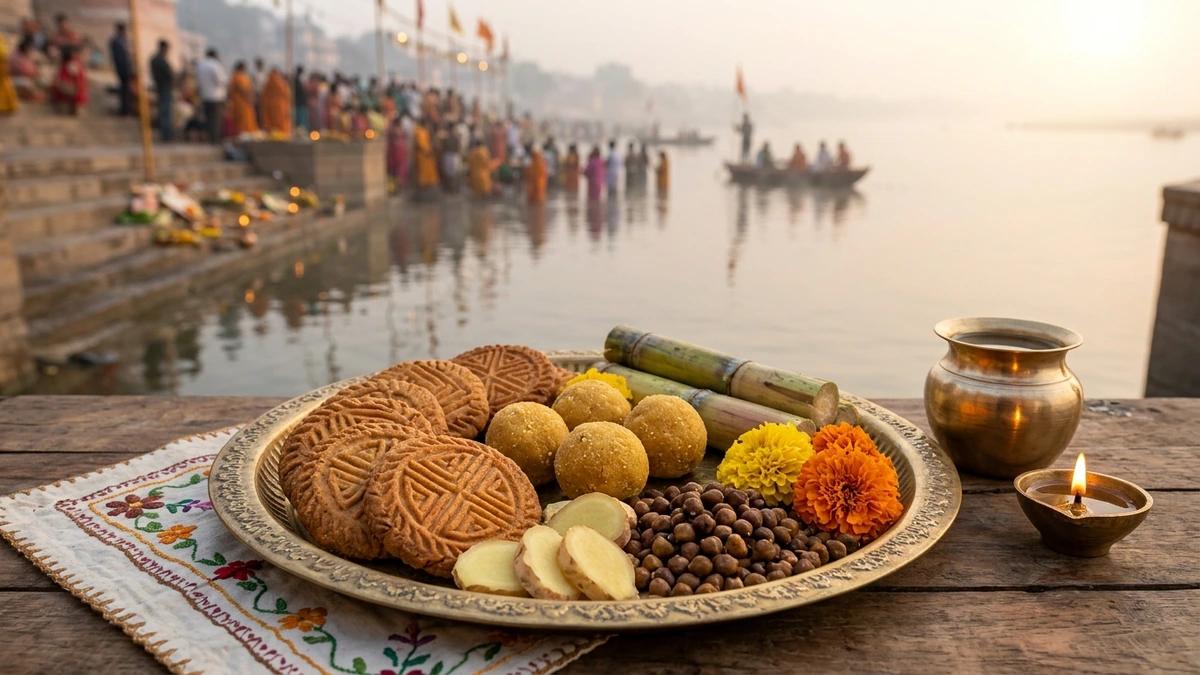
| Crispy Thekua and Kasar Ladoo | At the back of the soop | Main offering to Chhathi Maiya, made with pure ghee and wheat |
| Whole Pomelo (Dabh Nimbu) | In the center of the soop | A highly sacred fruit known for its medicinal properties |
| Coconut with husk | Right in the middle | Symbol of completeness and offering of the 'Shriphal' |
| Fresh Turmeric and Ginger plant | Tied to the edges of the soop | Symbol of health, antibiotic properties, and agricultural wealth |
| Water chestnut (Singhara) and Suthni | In pairs, in empty spaces | Natural tubers and roots grown in water |
| Banana, Custard apple, Apple, Orange | On top of the soop | Offering of all fresh seasonal fruits |
| Earthen four-faced lamp (Chaumukha Diya) | At the very front (the rim) | Lit during Arghya, a symbol of knowledge and light |
How to Pack and Carry the Daura?
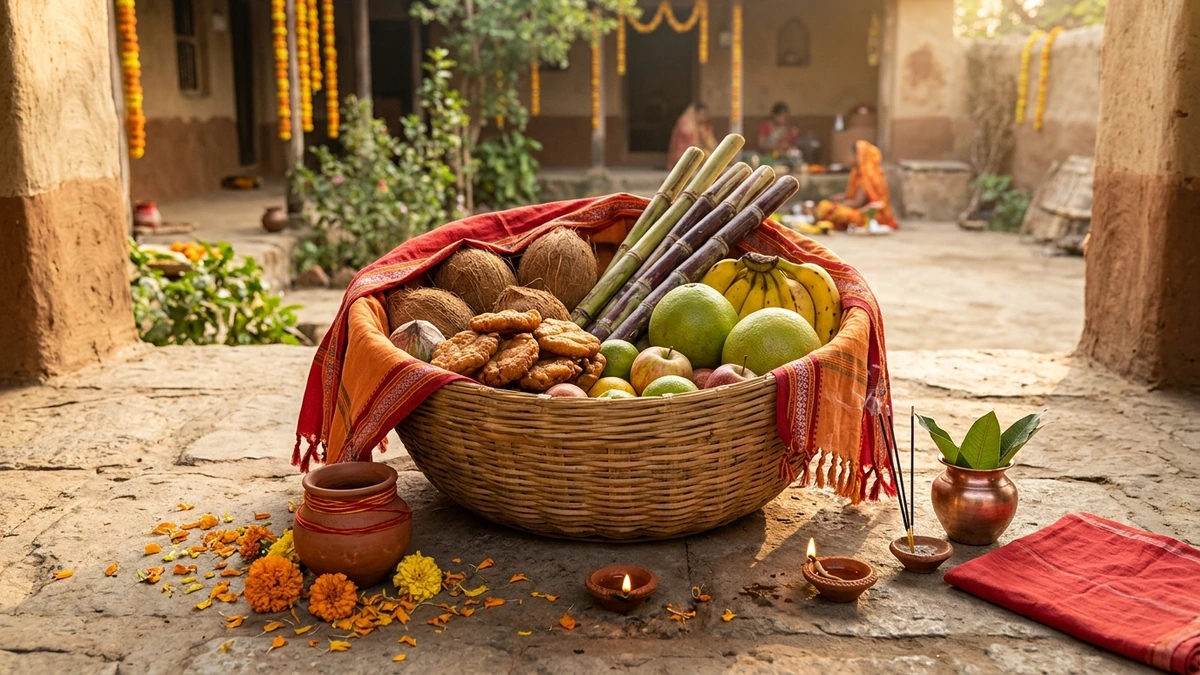
The Daura (large bamboo basket) is used to carry all the soops and additional fruit offerings to the riverbank (Ghat). The rules for packing the Daura are as follows:
- Lining the base: Place a new yellow or red cotton cloth at the very bottom of the Daura.
- Layering fruits and Thekua: Place heavy items like pumpkins, sugarcane pieces, coconuts, and large packets of Thekua at the bottom.
- Placing the Soop: Securely place the decorated bamboo soop on top of everything else so that the fruits do not fall.
- Covering with cloth: Cover the Daura from the top with a new yellow or red cloth to protect it from dust or accidental touch on the way.
- Tradition of carrying on the head: The Daura is always carried to the Ghat by a male family member (husband, son, or brother) barefoot on his head. Throughout the journey, chants praising Chhathi Maiya are recited.
What is the difference between the Sandhya Arghya and Usha Arghya soops?
Many new devotees often wonder if the same soop is offered on both days.
After Sandhya Arghya: When the Arghya is offered to the setting sun on the evening of Shasthi, the soop is brought back home from the Ghat. Fruits that have become wet from the water are replaced. If the Kosi ritual is performed at home at night, the soop is kept near the Kosi pavilion.
For Usha Arghya: For the morning of Saptami, fresh Thekua, fresh betel leaves, and a new earthen lamp are placed in the soop. At sunrise, after offering the Usha Arghya, this soop is dedicated to the Sun God. For precise timings, see: Table of correct timings for Sandhya and Usha Arghya.