Guru Nanak Jayanti 2026: The Sacred History, Auspicious Date, and Life-Changing Teachings of the Festival of Lights
 AI-generated illustration
Guru Nanak Jayanti 2026 Prakash Parv has concluded. This guide is preserved for historical and spiritual reference. To explore upcoming festivals and auspicious muhurats, check the links below:
KEY HIGHLIGHTS
On the sacred occasion of Kartik Purnima, celebrate Guru Nanak Jayanti 2026 by exploring the profound history of Prakash Parv. Discover the three core pillars of Sikhism, the spirit of selfless service through the Langar tradition, and the timeless, invaluable teachings of Guru Nanak Dev Ji.
Every year, on the full moon day (Purnima) of the Kartik month, the sacred Prakash Parv (Festival of Lights) of Sri Guru Nanak Dev Ji, the founder and first Guru of the Sikh faith, is celebrated with immense reverence, joy, and devotion. Also known as Gurpurab or Guru Nanak Jayanti, this holy day is not merely a celebration; it is a commemoration of that divine light of humanity, equality, truth, and selfless service which dispelled the social darkness, discrimination, and hypocrisy of the fifteenth century and showed the world a new path.
Table of Contents
Auspicious Date and Timing for Guru Nanak Jayanti 2026
Devotees are often confused about the date of Guru Nanak Jayanti. Some look for it around November 14th because, in some previous years, the festival fell in mid-November. However, according to the traditional Panchang and the Nanakshahi calendar, the Prakash Parv of Guru Nanak Dev Ji is always celebrated on the day of Kartik Purnima.
In the year 2026, the auspicious date of Kartik Purnima falls on Tuesday, November 24, 2026. According to the Panchang, the details of the auspicious timings for the Purnima Tithi are as follows:
- Purnima Tithi begins: November 23, 2026, at 11:42 PM
- Purnima Tithi ends: November 24, 2026, at 08:23 PM
- Main festival according to Udayatithi rules: Tuesday, November 24, 2026
Following the universally accepted principle of Udayatithi, the main Diwan, Nagar Kirtan, and special Langar services for the Prakash Parv will be organized with devotion across the world on November 24, 2026. For those looking for this date in mid-November, it is essential to understand that the date is determined solely by the phases of the moon, i.e., the full moon (Purnima).
A Brief Biography of Guru Nanak Dev Ji
Guru Nanak Dev Ji was born in Samvat 1526 (1469 AD) on the auspicious day of Kartik Purnima at a sacred place called Rai Bhoi di Talwandi. This holy site is now located in the Punjab province of Pakistan and is revered across the world as Sri Nankana Sahib.
His father's name was Kalyan Chand Das Bedi, respectfully known as Mehta Kalu Ji, and his mother's name was Tripta Devi. He had an elder sister named Bebe Nanaki. It was Bebe Nanaki who first recognized the divine light and spirituality hidden within Nanak Ji.
From childhood, Nanak Ji’s heart was not inclined toward accumulating worldly wealth, but rather toward contemplation of the Divine and service to the needy. When his father gave him twenty rupees to learn the art of business, Nanak Ji used that money to provide a hearty meal to hungry ascetics and saints. When his father asked where the profit was, he replied with simplicity that this was the "Sacha Sauda" (the True Bargain). This very act of the True Bargain later became the foundation of the world-famous Langar tradition of the Sikh faith.
The Three Core Pillars of the Sikh Faith
Guru Nanak Dev Ji did not teach society to renounce the world and wander in forests. He clearly stated that one can attain God while living in the world and fulfilling one's family responsibilities. For this, he gave three simple and practical principles of life:
- Naam Japna: Constantly remembering the One Onkar, the Almighty. Maintaining gratitude toward God in both speech and action. This removes the ego from the mind and brings peace to the heart.
- Kirat Karo: Earning one's livelihood with complete honesty, integrity, and hard work. Neither usurping anyone else's rights nor resorting to any form of deceit or trickery.
- Vand Chako: Sharing the portion of one's honest earnings that remains after meeting one's own needs with the helpless, poor, and hungry members of society. Sharing joys and resources together.
The Message of Ik Onkar and Social Equality
Guru Nanak Dev Ji gave the Mool Mantar: Ik Onkar Satnam Karta Purakh Nirbhau Nirvair Akal Murat Ajuni Saibhan Gur Prasad. Its direct and profound meaning is that God is One, He is the Truth, He is the Creator of the universe, He is fearless, He has no enmity, He is beyond time, and He is unborn and self-existent.
In an era when society was plagued by high and low status, casteism, untouchability, and religious hypocrisy, Guru Nanak Dev Ji fearlessly raised his voice for equality. He declared that in the court of the Divine, no one is asked about their lineage or caste; only a person's deeds and intentions are judged. He made Bhai Mardana Ji, who was considered a Shudra, his lifelong companion; Mardana Ji would play the Rabab while the Guru sang the divine hymns.
Guru Nanak Dev Ji was also a great champion of women's empowerment. He vehemently opposed the oppression of women in society at that time. In his hymns recorded in the Sri Guru Granth Sahib, he stated that a woman, from whom kings, emperors, sages, and the entire human society are born, can never be called inferior or weak.
The Four Udasis and Journeys for World Welfare
Guru Nanak Dev Ji did not limit himself to one place. To awaken humanity, he undertook thousands of miles of travel on foot in all four directions—East, West, North, and South. In Sikh history, these historic journeys are known as 'Udasis'.
He traveled north to Mount Sumeru, Tibet, and Ladakh, where he held spiritual dialogues with Buddhist Lamas and Siddha Yogis. In the south, he went as far as Rameswaram and Sri Lanka. In the east, he reached Assam, Bengal, Jagannath Puri, and Banaras. In the west, he traveled to Mecca, Medina, Baghdad, and Iran. Everywhere he went, he shattered superstitions and explained to people that God is not confined to any one temple, mosque, or direction, but resides in the heart of every living being.
Sacred Traditions in Gurdwaras on Prakash Parv
On the occasion of Guru Nanak Jayanti, a devotional atmosphere prevails in historic and local Gurdwaras around the world for many days in advance. During this time, the following religious rituals are primarily observed:
- Prabhat Pheri: About fifteen days before the main festival, devotees take out early morning processions (Prabhat Pheris) in their neighborhoods while singing Gurbani. The entire atmosphere becomes sanctified by the Shabad Kirtan.
- Akhand Path: Forty-eight hours before Gurpurab, a continuous, uninterrupted recitation of the Sri Guru Granth Sahib begins in Gurdwaras, known as Akhand Path Sahib. It concludes on the morning of Gurpurab.
- Nagar Kirtan: A day before the festival, a grand Nagar Kirtan (procession) is taken out, led by the Panj Piaras (the Five Beloved Ones) carrying the Palki Sahib. In this procession, the Sangat sings the praises of the Guru, and Sikh youth perform breathtaking displays of Gatka, the traditional martial art.
- Maha Langar Seva: On this day, a massive Langar is prepared in Gurdwaras. Whether king or commoner, everyone sits together in a single row on the floor to lovingly partake in the Langar of Kada Prasad, Dal, Roti, and Kheer.
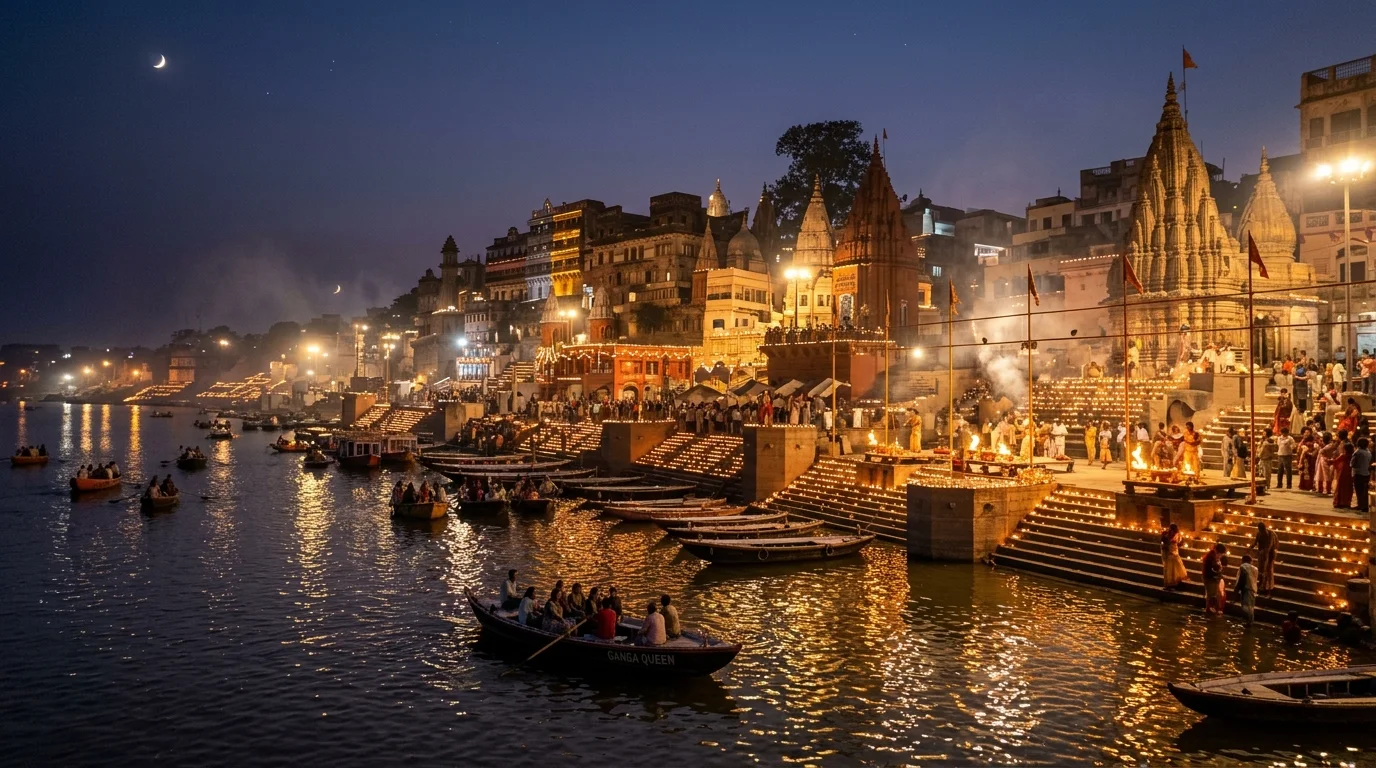
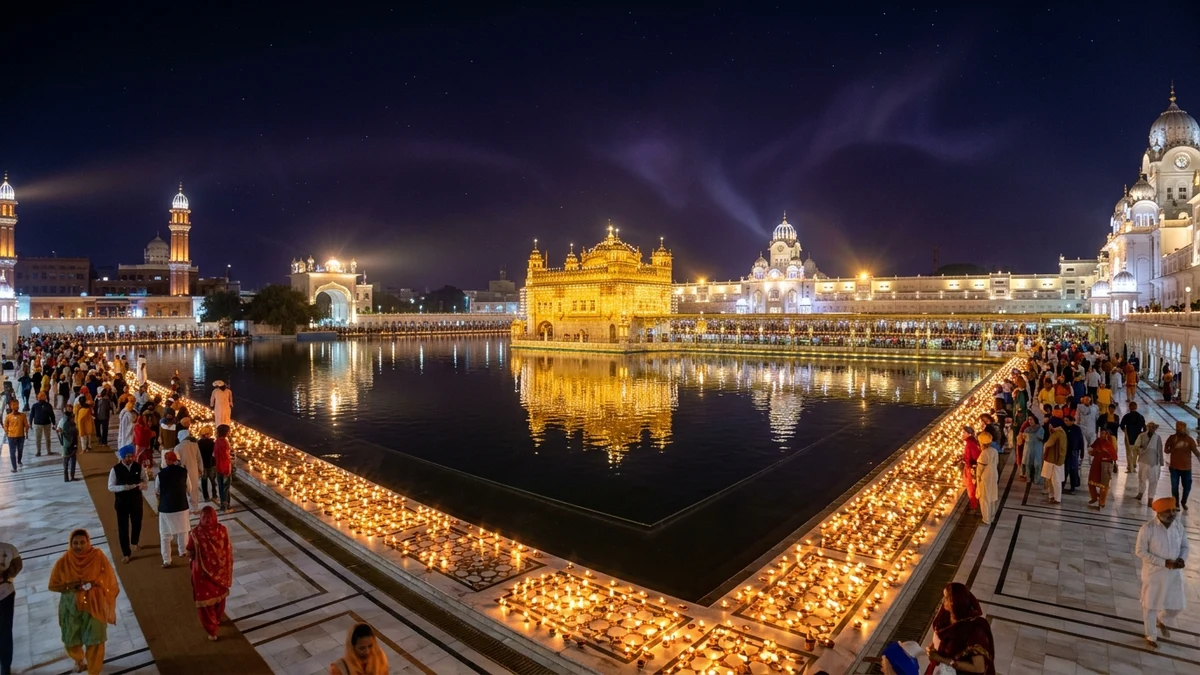
- Deepmala: In the evening, all Gurdwaras, especially the Sachkhand Sri Harmandir Sahib in Amritsar, are illuminated with spectacular fireworks and millions of lamps, making the Amrit Sarovar sparkle with light.
Relevance of Guru Nanak Ji's Thoughts in Modern Life
Today, when the world is grappling with stress, greed, selfishness, environmental crises, and mutual hatred, the teachings of Guru Nanak Dev Ji become even more relevant. Giving nature the highest status, he once said: Pavan Guru Pani Pita Mata Dharat Mahat, meaning air is like our Guru, water is like our father, and this vast earth is our mother. Today, as we face the crisis of climate change and pollution, the Guru's love for nature shows us the right path to live.
Living a life of simplicity, erasing one's ego, remaining ready to serve the needy, and treating everyone as equal is our true tribute to Guru Nanak Dev Ji.
Conclusion
Guru Nanak Jayanti is not just a celebration of a historic day; it is an opportunity to look within and purify our thoughts. When we feed a hungry person with love, become a support for the weak, and practice honesty in our earnings, the light of Guru Nanak Dev Ji's thoughts truly spreads in our lives. Let us all resolve on this holy Prakash Parv to walk the path of truth, service, and harmony shown by him.