Tulsi Chalisa, Namashtak & Aarti: [Complete Text & Hindi Meaning] Daily Puja Rituals, 8 Sacred Names, and Essential Rules
 AI-generated illustration
KEY HIGHLIGHTS
Discover the complete lyrics and simple Hindi meanings of the Tulsi Chalisa, Tulsi Namashtaka (eight sacred names), and Aarti. Master the daily Tulsi worship rituals, essential mantras, seven vital rules, and the divine blessings bestowed by this sacred practice. Embrace the spiritual depth and grace of honoring the holy Tulsi.
On the auspicious occasion of Dev Uthani Ekadashi and Tulsi Vivah, falling on November 21st, the fruits of worshipping Tulsi multiply infinitely. However, Tulsi worship is not a ritual for just one day; it is a daily practice (Daily Ritual) of the Sanatan lifestyle. If you seek happiness, peace, a healthy body, and the eternal blessings of Lord Vishnu and Goddess Lakshmi in your life, this complete collection of the 8 miraculous names of the Tulsi Namashtak, Tulsi Chalisa, and evening Aarti will prove to be highly beneficial for your daily prayers.
Table of Contents
Quick Summary: Key Rules for Tulsi Recitation and Daily Worship
- Tulsi Namashtak (8 Names): Vrinda, Vrindavani, Vishwapujita, Vishwapavani, Pushpasara, Nandini, Tulsi, and Krishnajeevani. Remembering these daily grants the merit of an Ashwamedha Yajna.
- Aarti & Lamp: After bathing in the morning, offer pure water while facing East. In the evening, during the twilight hour (Godhuli Bela), light a lamp with pure cow ghee.
- Prohibited Days: It is strictly forbidden to offer water or pluck leaves on Sundays, both Ekadashis, and during lunar or solar eclipses.
Tulsi Namashtak Stotram (Tulsi Namashtak Stotram with Hindi Meaning)
The Tulsi Namashtak Stotram is described in the Brahmavaivarta Purana (Prakriti Khanda). Lord Narayana himself told Devarshi Narada that a devotee who recites these eight sacred names of Tulsi every morning receives the merit of bathing in all holy rivers, and all the sorrows of their life are eradicated.
॥ Original Sanskrit Namashtak Verses ॥
Vrinda Vrindavani Vishwapujita Vishwapavani.
Pushpasara Nandini cha Tulsi Krishnajeevani॥
Etannamashtakam chaiva stotram namarthasanyutam.
Yah patettam cha sampujya sa chashwamedhaphalan labhet॥
Simple Hindi Meaning of the 8 Divine Names of Tulsi Namashtak
Each name of Tulsi holds a deep spiritual secret. Understanding the meaning of these names while reciting them multiplies the impact of your worship:
1. Vrinda (Vrinda)
The collective essence of all vegetation and medicinal herbs. She is the presiding deity of the botanical power of the entire universe.
2. Vrindavani (Vrindavani)
She who appeared in Vrindavan and never leaves the holy land of Vrindavan; she is Vrindavani.
3. Vishwapujita (Vishwapujita)
She who is worshipped equally by gods, Gandharvas, Yakshas, Nagas, sages, and humans across all three worlds.
4. Vishwapavani (Vishwapavani)
She who purifies the entire world and all living beings simply by her sight, touch, and the offering of her water.
5. Pushpasara (Pushpasara)
The essence of all fragrant flowers in the world. Her leaves and blossoms are dearer to Shri Hari than all rare gems.
6. Nandini (Nandini)
She who imparts divine joy to the hearts of devotees and grants prosperity and peace to the family lineage.
7. Tulsi (Tulsi)
'Tula nasti yasyah' - She who is incomparable, whose divinity and purity cannot be matched by anything in the world.
8. Krishnajeevani (Krishnajeevani)
She who is the life-force of Lord Krishna. Without a Tulsi leaf, no offering to Lord Shri Hari is ever complete.
Shri Tulsi Chalisa Full Lyrics
Tulsi Chalisa should be recited every morning after bathing by lighting a ghee lamp. If daily recitation is not possible, it must be recited every Thursday and on both the Shukla and Krishna Paksha Ekadashis.
॥ Shri Tulsi Chalisa ॥
॥ Doha ॥
Shri Tulsi Maharani, karun vinay sir naay.
Kripa drishti mopar karo, rakho charan samaay॥
Sakal manorath purn hon, miten sakal klesh bhaar.
Hari bhakti mohi dijiye, vinati baarambaar॥
Jai Jai Tulsi Bhagwati, sakal manorath daay.
Charan kamal raj sheesh dhari, daas vimal gun gaay॥
Vishnu priya shubh mangalkari. Jag hit hetu pragat mahatari॥
Hari charanan anuraag badhayo. Asur sanharak tej dikhayo॥
Rishi muni sur nar sab gun gaaven. Ved puranan mahima paaven॥
Vrinda naam maha shubhkari. Vaikunth dham sada sukhkari॥
Shankhchud asur balwana. Jaake dar kanpe bhagwana॥
Sati dharm ki shakti apara. Tode suran ke kasht bhara॥
Leela rachi prabhu Narayana. Chhal kiyo taahi bhakt ubaaran॥
Krodhit bhayi shaap tab dinha. Pashan roop prabhu tav kinha॥
Shaligram bhaye Hari raai. Tulsi sang preeti adhikayi॥
Dinho var prabhu kripa nidhana. Tulsi bin mohi kachhu na suhana॥
Jo mohi chaahe Tulsi puje. Taake sam kou bhakt na duje॥
Ganga Jamuna sab sari dhama. Tulsi baas bhayo sab thama॥
Yamuna tat par vaas tiharo. Gopijan ko pran piyaro॥
Radha sang raas ras ranche. Tulsi dal Hari sheesh viraje॥
Chhappan bhog aru meva thari. Tulsi bin prabhu na let mahari॥
Ekahu patra samarpe joi. Koti yajna sam pavan hoi॥
Kartik maas kare jo puja. Ta sam tribhuvan dhanya na duja॥
Deep daan jo sanjh savere. Kasht na aave kabahu nere॥
Tulsi vivah rachave joi. Janam-maran bhav bandhan khoi॥
Kanyadaan maha phal paave. Sab sukh bhogi param pad jaave॥
Tulsi kaashth ki mala dhaare. Yam ke doot dekhi dari bhaage॥
Ram naam jap mala saaje. Hriday beech prabhu Hari viraje॥
Tulsi patra jo mukh mein aave. Ant kaal sadgati so paave॥
Ganga jal sang Tulsi daana. Taaran taran Vaikunth nidhana॥
Rog dosh sab door nasave. Tulsi dal jo nitya chabaave॥
Vaat pitt kaph peeda haari. Amrit sam aushadhi gunkaari॥
Ghar aangan mein Tulsi sohai. Dekhi dev muni man ati mohai॥
Bhoot pishach nikat nahin aave. Tulsi baas jahan darshave॥
Charon ved jahan yash gaaven. Shesh Mahesh paar nahin paaven॥
Narad Sharad sheesh navaven. Brahmadik sab dhyan lagaven॥
Jo yeh Chalisa nitya gaave. Man vanchit sab sampati paave॥
Putra heen ko santati hoi. Nirdhan hoy so dhanpati hoi॥
Kodin kaaya kanchan paave. Andha nayan jyoti darshave॥
Sankat katai mitai sab peera. Jo sumirai Tulsi matidhira॥
Bhakti bhav se jo koi dhyave. Bhav saagar se paar lagave॥
Tulsi matu sharan hum aaye. Rakho laaj sharan apnaaye॥
॥ Doha ॥
Tulsi Maharani namo, namo namo Hari kant.
Kripa drishti mopar karo, jaise sant anant॥
Sakal klesh harani jayati, sukh sampati daatar.
Tulsi Chalisa padhe, utare bhav nidhi paar॥
Shri Tulsi Ji's Sacred Aarti
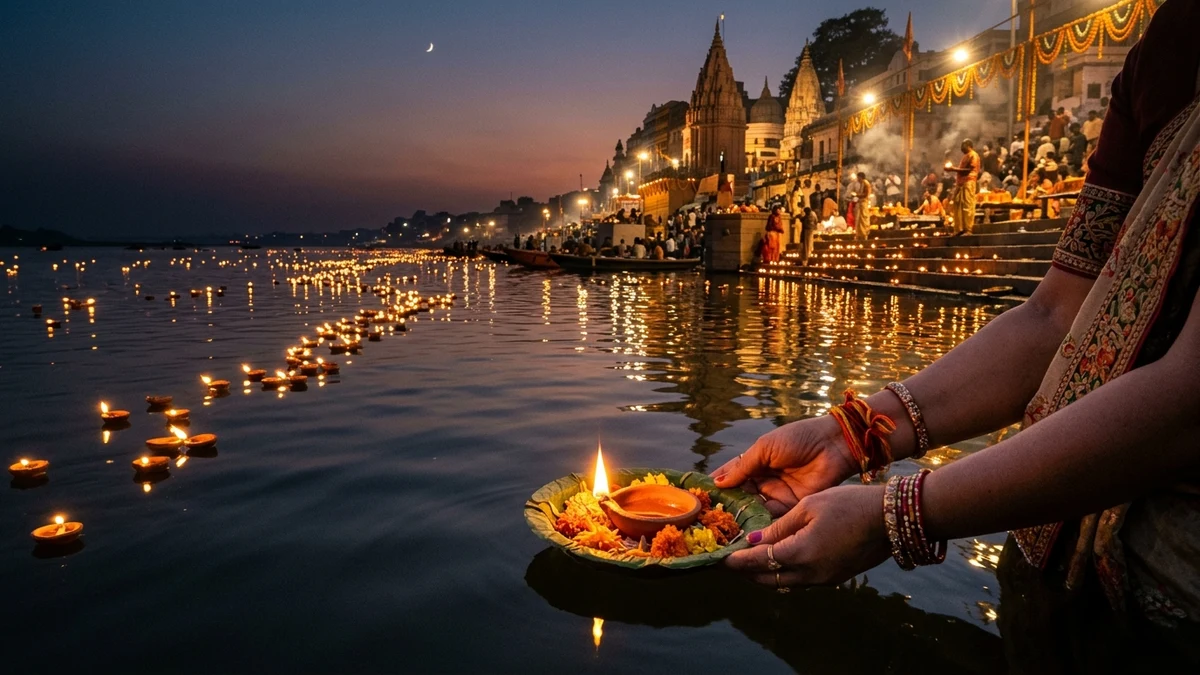
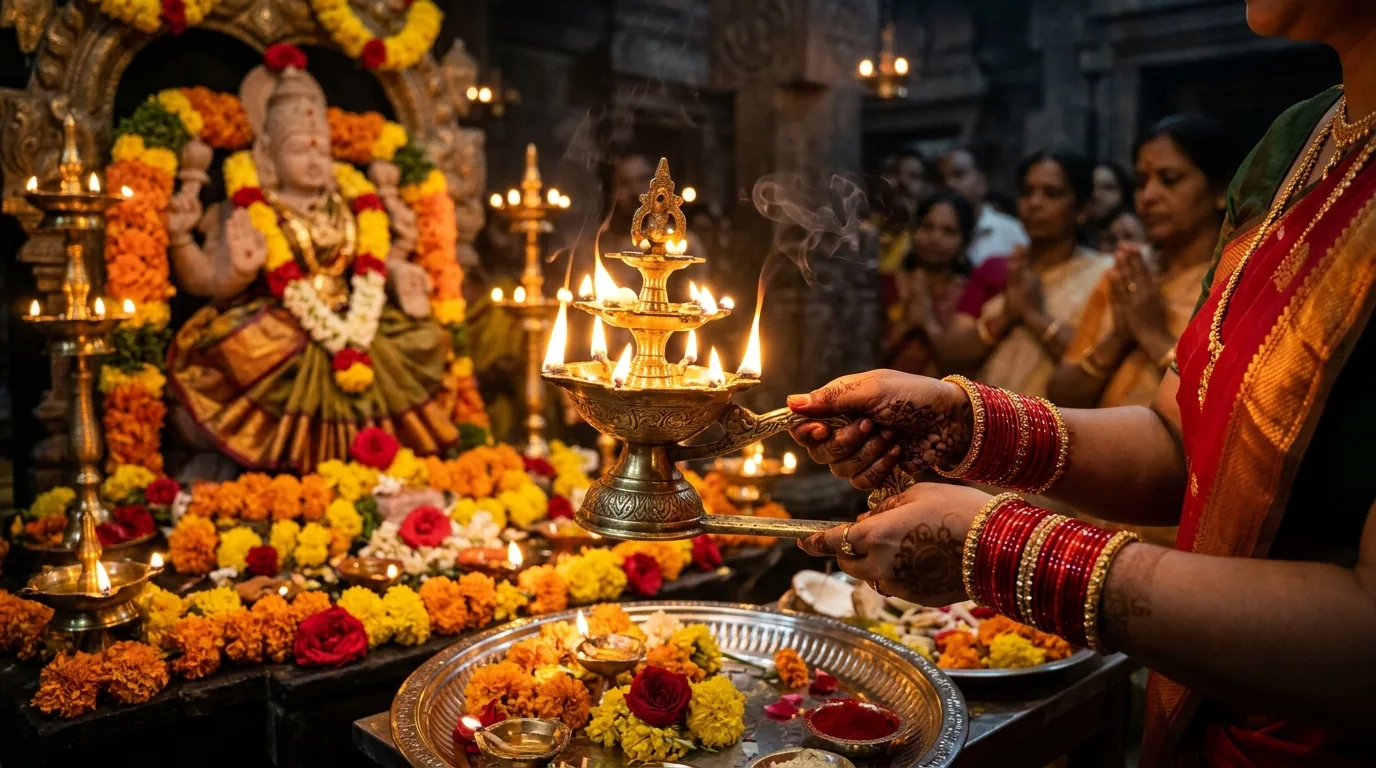
Every evening, one should sing this sacred Aarti in front of Tulsi Ji by lighting a ghee lamp and using camphor. It is customary to perform three circumambulations (Parikrama) while performing the Aarti.
॥ Aarti of Mother Tulsi ॥
Jai Jai Tulsi Mata, Maiya Jai Tulsi Mata.
Sab jag ki sukhdata, sabki varmata॥
॥ Om Jai Tulsi Mata... ॥
Sab yogon ke upar, sab rogon ke upar.
Ruj rin harike lijai, sabki sukh data॥
॥ Om Jai Tulsi Mata... ॥
Batuk sahasron pyare, charan virajat hain.
Mahima amit tumhari, jag hitkari ho॥
॥ Om Jai Tulsi Mata... ॥
Dhoop deep naivedya, aarti sanjeevan.
Karat niranjan shobha, lakhi sur muni mohe॥
॥ Om Jai Tulsi Mata... ॥
Chhappan bhog dhare Hari, bin Tulsi na chhuven.
Tulsi patra samarpan, Hari ati sukh paaven॥
॥ Om Jai Tulsi Mata... ॥
Shri Hari ke sheesh virajat, tribhuvan man mohe.
Shaligram sang byahi, sur nar muni seve॥
॥ Om Jai Tulsi Mata... ॥
Jo koi aarti gaave, bhakti bhav laave.
Sukh sampati ghar aave, duhkh binse saara॥
॥ Om Jai Tulsi Mata... ॥
Jai Jai Tulsi Mata, Maiya Jai Tulsi Mata.
Sab jag ki sukhdata, sabki varmata॥
Correct Method for Daily Tulsi Puja and Vedic Mantras
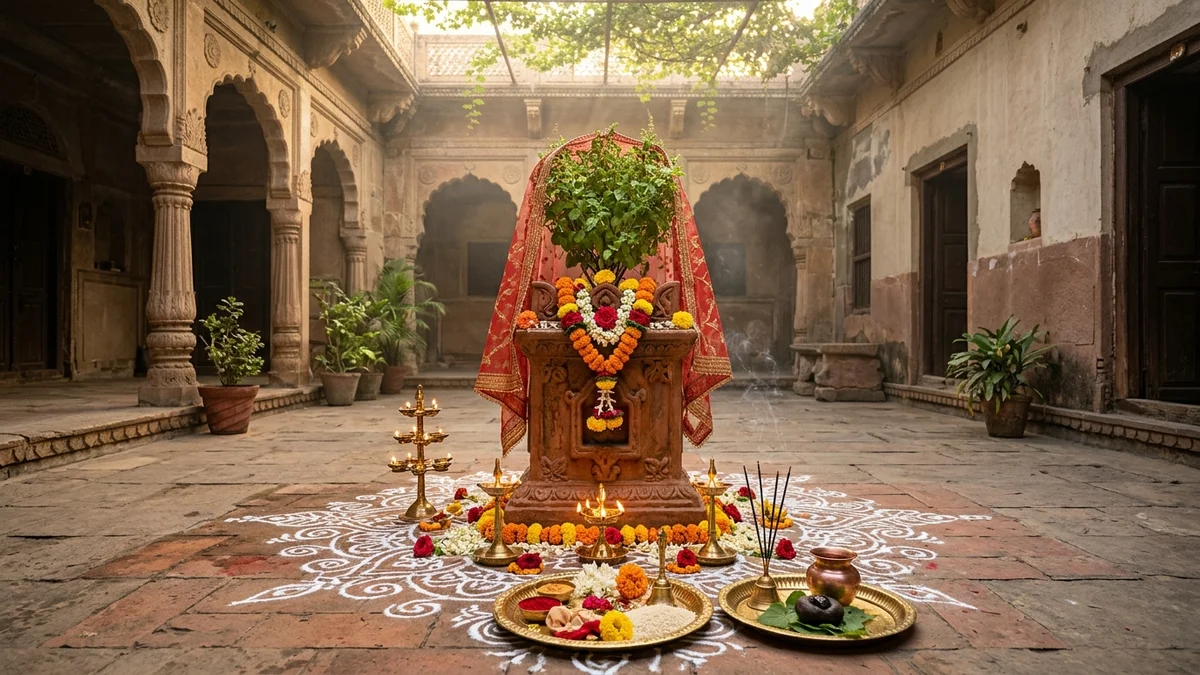
The scriptures describe a very simple yet disciplined method for Tulsi worship. If you perform this 5-minute ritual daily, all negative energy in your home will be dispelled:
Bathe during the Brahma Muhurta or within 2 hours of sunrise and wear clean clothes. Never touch Tulsi without bathing.
Take pure water in a copper or brass vessel (if possible, add a little Gangajal and a pinch of Roli). Facing East, slowly offer water at the roots of the Tulsi plant.
While offering water, chant this sacred mantra at least 3 times:
Apply a tilak of turmeric, kumkum, and sandalwood on the Tulsi planter. Tulsi is considered the Goddess of Suhag (marital bliss), so married women can also offer vermilion (sindoor).
After offering water, perform 3 clockwise circumambulations around the Tulsi plant. If space is limited, stand in place and turn around 3 times.
Immediately after sunset, be sure to light a pure ghee lamp near Tulsi Ji. Do not place the lamp directly on the ground; place it on a small bed of Akshat (rice).
7 Essential Rules of Tulsi Worship: When Not to Offer Water and When Not to Pluck Leaves
Even a small mistake made out of ignorance in Tulsi worship can cause a defect. According to religious scriptures, it is mandatory to strictly follow these 7 rules:
According to mythological belief, Mother Tulsi observes a waterless fast for Lord Vishnu every Sunday. Offering water on Sunday breaks her fast, so do not offer water or touch the plant on Sundays.
Mother Tulsi also observes a waterless fast on both Ekadashis of the month (Shukla and Krishna Paksha). On Ekadashi, only perform evening Aarti and lamp offering; do not offer water.
Tulsi leaves should never be plucked on Sundays, Ekadashi, Dwadashi, Sankranti, during eclipses, or after sunset. Touching Tulsi without bathing or in an impure state is considered a sin.
Never use your nails while plucking Tulsi leaves. Gently separate the stem with your fingertips. Before plucking, join your hands and ask for permission: "Matastulsi Govinda hridayananda karini, Narayanasya pujartham chinomi tvam namostu te."
For both religious and scientific reasons, Tulsi leaves should not be chewed with teeth. Tulsi contains mercury, which can damage tooth enamel. Therefore, Tulsi should be swallowed directly with water as Charanamrit or medicine.
If Manjari (seeds) appear on the Tulsi plant, they should be removed periodically and offered to Lord Shaligram or Shri Krishna. The weight of too many Manjaris is considered burdensome for the plant. Removing them keeps the plant lush and helps alleviate financial distress.
A dried Tulsi plant should not be kept in the house. Remove it respectfully and immerse it in a holy river, canal, or flowing water, and immediately plant a new one in the same pot.
Connection to Tulsi Vivah and Upcoming Festivals
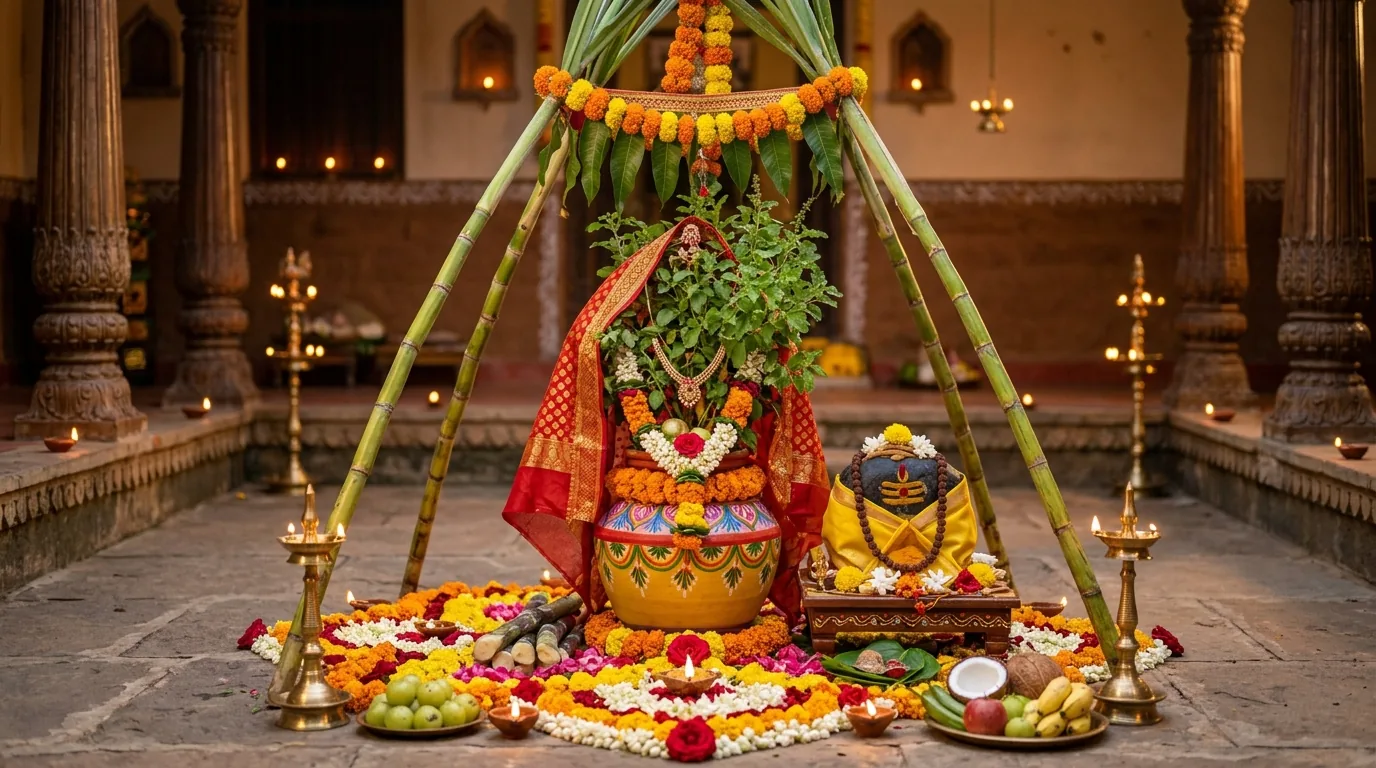
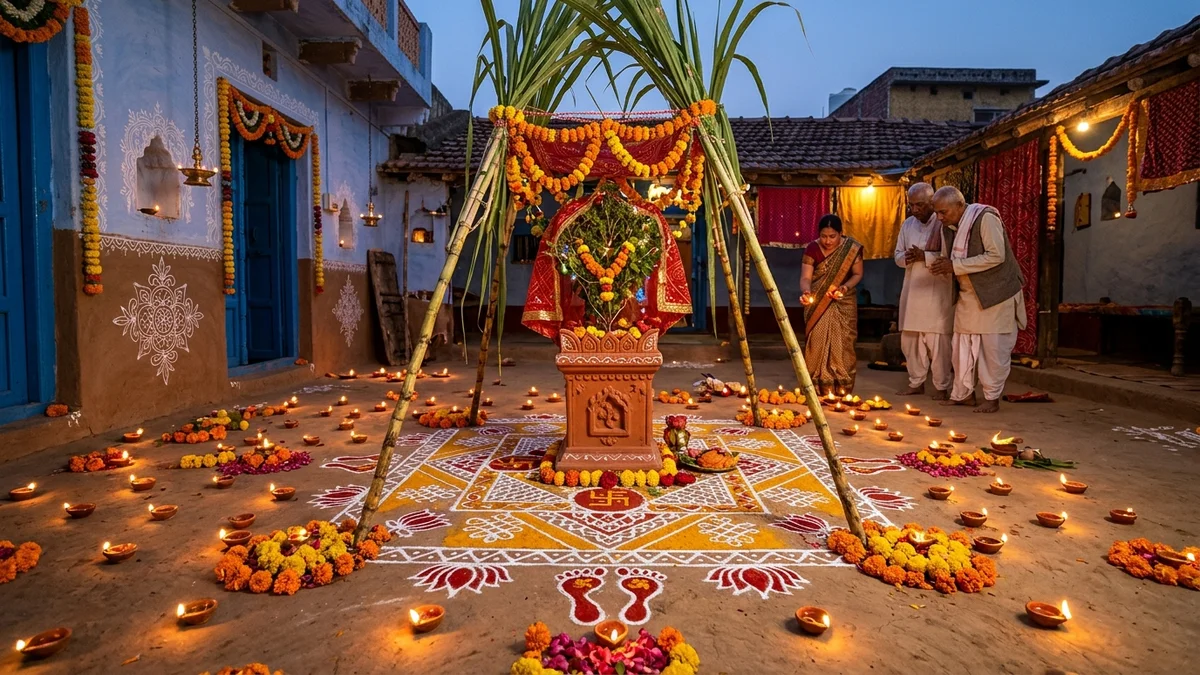
The grandest festival of Tulsi worship is celebrated on Kartik Shukla Ekadashi, i.e., Dev Uthani Ekadashi 2026 and Tulsi Vivah (Tulsi Vivah 2026). On this day, Mother Tulsi's marriage to the Shaligram form of Lord Vishnu is performed with Vedic chants under a grand canopy of sugarcane.
If you are performing the Tulsi Vivah ritual, follow the sequence of these prayers as follows:
- At the beginning of the marriage ritual, recite the Tulsi Namashtak.
- After offering turmeric and chunari to the bride and groom (Shaligram and Tulsi), recite the Shri Tulsi Chalisa.
- During the auspicious Aarti of the marriage, sing the Aarti of Tulsi Ji.
- Immediately after this, Tulsi leaves also hold special significance in the upcoming Igaas Bagwal 2026 (Uttarakhand Budhi Diwali) and the grand Dev Deepawali 2026 lamp offerings on Kartik Purnima.
Frequently Asked Questions (FAQs)
Q1: What is the best time to recite Tulsi Chalisa?
Answer: It is best to recite Tulsi Chalisa immediately after bathing in the morning or during the twilight hour in the evening by lighting a ghee lamp. Reciting it on Thursdays and Ekadashi brings special merit.
Q2: What are the benefits of daily recitation of Tulsi Namashtak?
Answer: According to the Brahmavaivarta Purana, daily recitation of the eight divine names of Tulsi (Vrinda, Vrindavani, Vishwapujita, Vishwapavani, Pushpasara, Nandini, Tulsi, and Krishnajeevani) grants merit equal to an Ashwamedha Yajna, destroys poverty, and eliminates the fear of untimely death.
Q3: Can women recite Tulsi Chalisa during their menstrual cycle?
Answer: It is forbidden to touch the Tulsi plant or perform worship near it during the menstrual cycle. However, women can mentally remember the Tulsi Chalisa. Physical worship should only be done after becoming pure.
Q4: Why is water not offered to Tulsi on Ekadashi and Sundays?
Answer: According to mythological beliefs, Mother Tulsi observes a waterless fast for Lord Vishnu on Sundays and Ekadashis. If water is offered on these days, her fast is broken, which is considered a fault. Therefore, only lighting a lamp is prescribed on these days.
Q5: Which lamp should be used for Tulsi worship?
Answer: Lighting a clay or brass lamp with pure cow ghee is considered most auspicious for Tulsi worship. Use a red cotton wick or a pure cotton wick in the lamp and always place the lamp on a bed of Akshat (rice).